Off-plan properties
Alcohol is legal in Dubai, sold openly, and governed by a licensing system that most visitors never notice because hotels and restaurants hold the licence on their behalf. The rules only become visible when you want to buy a bottle to take back to your room.
Two changes in recent years reshaped the practical picture: retail purchase opened to tourists rather than residents only, and the municipality tax on alcohol sales was first suspended and later reinstated. Guides written between those two points describe a situation that no longer applies.
This guide sets out where visitors can drink, where they can buy, what the customs allowance covers, how the emirates differ, and which rules carry serious consequences. Requirements reflect August 2026 and are revised periodically — verify current rules before travelling, and note that this is general information rather than legal advice.
Four conditions define the whole system, and they are simpler than the reputation suggests.
The most common misunderstanding among first-time visitors is thinking they need a licence to have a drink at dinner. They do not. The venue is licensed and that is sufficient. The licence question arises only for retail purchase.
Muslims are not permitted to purchase or consume alcohol in the UAE regardless of nationality or residence status.
The simplest route and the one most visitors use without thinking about it.
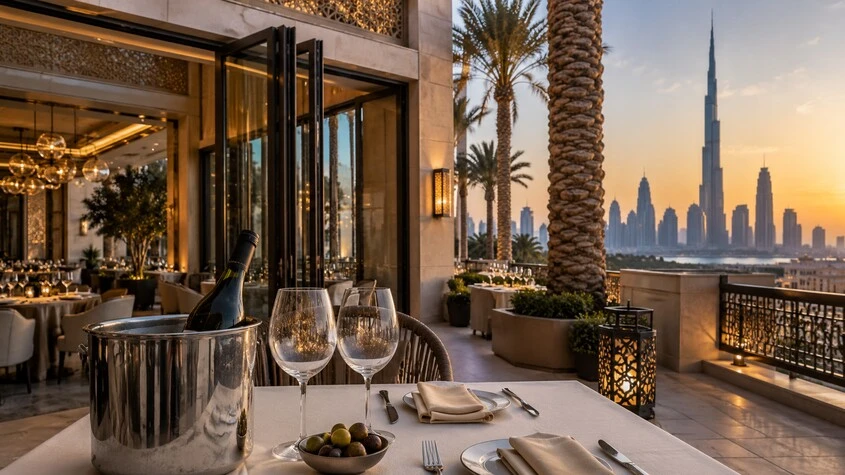
Hotels across every price bracket operate licensed bars and restaurants, and they serve both guests and non-guests. Beyond hotels, a substantial number of standalone restaurants, clubs and beach clubs hold licences of their own. In practice, if a venue lists a wine or cocktail menu, it is licensed.
Nothing is required of you beyond identification. No licence, no registration, no paperwork — a passport or Emirates ID if you are asked to prove your age, and that is the entire process.
Prices at licensed venues are high by international standards, which is a function of licensing costs and taxation rather than of the venue. Happy hours, ladies’ nights and brunch packages are widespread and are how most residents manage the difference.
This is where the rules are specific, and where the recent change matters.
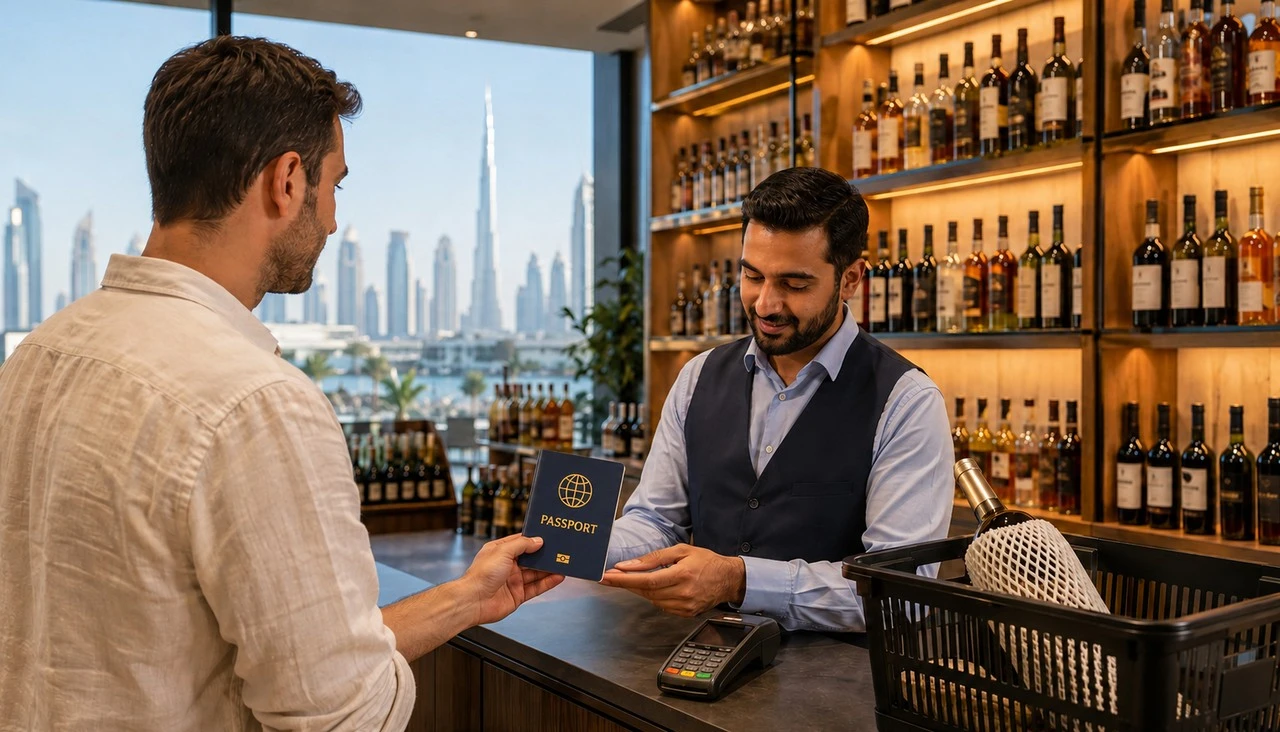
Two licensed retail chains operate across Dubai, with branches in residential districts rather than in tourist areas — they are deliberately discreet, without street-facing displays. Purchasing from them requires a personal liquor licence.
Visitors can now obtain that licence, which was not the case before 2023. It is issued at the shop itself, free of charge, on presentation of a passport and proof of visitor status. It is temporary, tied to the length of your stay, and issued in minutes rather than days.
Buying alcohol from anywhere other than a licensed retailer — an individual, an unlicensed shop, an informal arrangement — is illegal and is treated seriously. The legitimate channels are easy enough to use that there is no reason to look elsewhere.
The most convenient option for most visitors, and it happens before you have left the airport.
Dubai’s arrivals duty free sells alcohol to non-Muslim travellers aged 21 and over, and buying on arrival rather than on departure is normal practice here. Prices are generally better than at licensed retail in the city.
The allowance is a customs limit, not a shopping suggestion. Non-Muslim travellers may bring in a defined quantity of alcohol — a set number of litres of spirits and wine, or a set number of beer cans — and exceeding it means confiscation and potentially a penalty. Check the current figures before relying on them, since they are adjusted from time to time; the wider customs picture is set out in our guide to what you can and cannot bring into Dubai.
Two practical notes. Keep the receipt and the sealed bag until you reach your accommodation. And the allowance applies per traveller, so a couple has twice the allowance — but it must be carried by the person it belongs to.
Pricing has moved twice in recent years and the direction has reversed.
| Period | Municipality tax on alcohol sales | Effect on retail prices |
|---|---|---|
| Before 2023 | Applied | Higher retail prices |
| From January 2023 | Suspended | Retail prices fell noticeably |
| From January 2025 | Reinstated | Retail prices rose again |
The practical consequence is that any guide written during the suspension understates current retail prices. If you are budgeting from an article published in 2023 or 2024, add the tax back. Venue pricing was affected less, because licensing costs rather than this tax drive most of the difference between bar prices here and elsewhere.
Duty free on arrival sits outside the retail tax structure, which is a further reason most residents and frequent visitors buy there.
This catches visitors more often than any other rule, and the consequences are legal rather than inconvenient.
| Emirate | Position |
|---|---|
| Dubai | Licensed venues and licensed retail; visitor licences available |
| Abu Dhabi | Licensed venues and retail; licence requirements were eased in 2020 |
| Sharjah | Alcohol is prohibited entirely — no venues, no retail, no possession |
| Ajman, Umm Al Quwain, Ras Al Khaimah, Fujairah | Licensed venues exist; retail rules vary by emirate |
Sharjah is the one to internalise. It is dry, and that includes carrying alcohol through it. The road between Dubai and the northern emirates passes through Sharjah territory, so a bottle bought in Dubai and driven north crosses a jurisdiction where possessing it is an offence.
If you are travelling between emirates by car, this is worth planning around rather than discovering — the wider practicalities of driving around the country are covered in our guide to road trips from Dubai. For anyone considering the northern emirates as somewhere to live rather than visit, the alcohol position is one of several lifestyle differences set out in our guide to the quieter emirates.
Three offences, and all three are treated considerably more seriously than visitors expect.
The drink-driving rule deserves emphasis because the alternative is so easy. Taxis and ride-hailing are inexpensive and available everywhere, and the metro runs late on weekends. There is no scenario in which driving after a drink is the sensible option here — how the transport card works is covered in our guide to the Nol card.
One further point of etiquette rather than law: behaviour in public that would pass without comment elsewhere — loud conduct, public displays of affection — attracts attention here, and doing it while visibly intoxicated compounds it.
Practice has relaxed in recent years, and the underlying expectation has not.
During Ramadan, licensed venues generally continue to serve, and the widespread daytime closures of previous years are largely gone. What remains is an expectation of discretion: quieter service, less visible consumption, and awareness that many people around you are fasting.
The reliable approach is to follow the venue’s lead rather than assume either extreme. If a hotel bar is open and serving, it is operating lawfully. Eating, drinking and smoking in public during daylight hours remains inappropriate regardless of what the venue does indoors.
Similar discretion applies around major religious occasions, and the customs surrounding them are worth understanding before a visit that overlaps one — our guide to Eid al-Adha in Dubai covers the etiquette in more detail.
Six points that cover almost every situation a visitor encounters.
Do tourists need a licence to drink in Dubai?
Not to drink at a licensed venue — the venue holds the licence. A personal licence is needed only to buy alcohol from a retail shop to take away, and visitors can now obtain one free at the shop itself.
How do I get a visitor liquor licence?
At either of the licensed retail chains, on presentation of your passport and proof of visitor status. It is free, issued in minutes and valid for the duration of your stay.
Can I buy alcohol at the airport on arrival?
Yes. Arrivals duty free sells to non-Muslim travellers aged 21 and over, subject to the customs allowance, and it is generally the cheapest option available.
How much can I bring in?
A defined allowance per non-Muslim traveller, covering a set quantity of spirits and wine or of beer. The figures are adjusted from time to time, so check the current limits before travelling — exceeding them means confiscation and possibly a fine.
Can I take alcohol to Sharjah?
No. Sharjah prohibits alcohol entirely, including possession, and the road north from Dubai passes through it. Plan the route with that in mind.
Is alcohol served during Ramadan?
Licensed venues generally continue to serve, with more discretion than usual. Eating, drinking and smoking in public during daylight hours remains inappropriate.
What happens if I am caught drink-driving?
The limit is zero, and penalties include fines, licence confiscation, vehicle impoundment and imprisonment. Insurance is void in the event of an accident. Taxis, ride-hailing and the metro make this entirely avoidable.
Can residents buy alcohol on the same basis?
Residents obtain a personal liquor licence through the same retailers, which has been free of charge since 2023. The process is comparable and the licence is longer-term.
Everything above is a minor practicality on a week’s holiday. It becomes something else entirely when you are choosing which emirate to live in — Sharjah’s position is one of several ways in which the emirates differ in daily life, alongside dress expectations, weekend rhythm and the character of public space. Those differences shape a household’s experience far more than the rent gap that usually drives the choice. DDA Real Estate is a real estate agency in the UAE. We work across Dubai, Abu Dhabi, Sharjah and the northern emirates, and we are straightforward about what each one is like to live in rather than only what it costs.
Explore our listings in the UAE and get in touch: tell us how you actually want to live and we will tell you which emirates and districts fit, where the savings are real and where they come with adjustments you would rather know about before signing a year’s lease.