Off-plan properties
Whether you need a car in Turkey depends less on the city you choose than on the street. Two flats in the same district can mean a life on foot or a life behind the wheel.
The question matters more here than in most countries. Special consumption tax and VAT push the price of a new car far above European levels, and a foreign-plated car can stay only for a limited time. Meanwhile the rail network keeps growing: Istanbul alone runs around 476 km of urban rail, and high-speed trains link Ankara with Istanbul, Konya and Sivas.
This guide sets out where car-free living works, what carries the load in each city, and how to choose an address that keeps you independent of a car. Figures are as of October 2026, and fares, rules and timetables change, so confirm current details locally.
The short answer, city by city.
| Place | What carries the load | Without a car |
|---|---|---|
| Istanbul | Metro, Marmaray, trams, ferries | Fully, near a line |
| İzmir | Metro, İZBAN, trams, ferries | Fully in central districts |
| Ankara | Metro and the national rail hub | Comfortable in the centre |
| Antalya | Tram lines and a dense bus network | Along tram and bus corridors |
| Alanya | Buses, minibuses, taxis | In and near the centre |
| Villages and villa areas | Infrequent minibuses | Rarely |
The last row explains most disappointments. People move to a villa outside town for the view, then discover that every loaf of bread is a drive. The city on the map matters less than the distance to the nearest stop.
The arithmetic starts at the dealership.
New cars carry special consumption tax, known as ÖTV, which rises with engine size: roughly 45 to 80 percent for small engines and up to 220 percent for large ones. Twenty percent VAT is then charged on top of the price including that tax.
The result is a car that costs well over its European price. Add insurance, fuel, parking and the annual vehicle tax, and a car becomes one of the largest items in a household budget. Living near transport is not only a lifestyle choice but a financial one.
The city with the strongest case for going car-free.
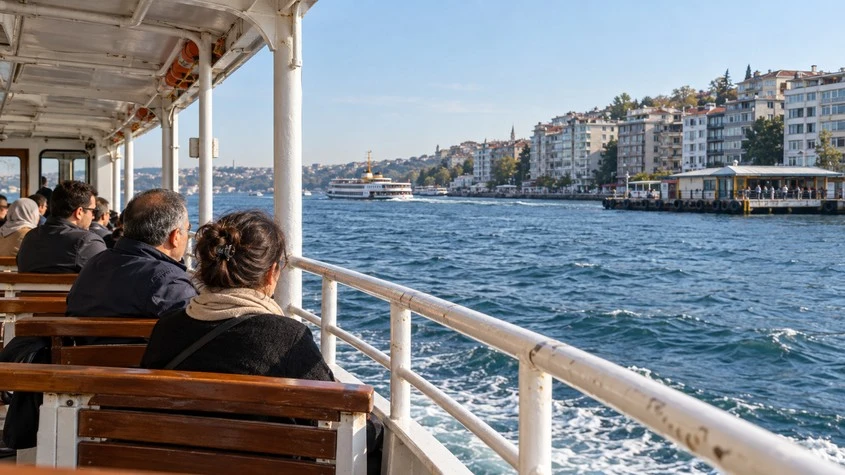
The metro runs 11 lines with 169 stations, and together with Marmaray, trams, funiculars and the bus rapid transit line the urban rail network reaches about 476 km. Marmaray crosses under the Bosphorus and links Halkalı on the European side with Gebze on the Asian side. Ferries add a route that traffic never touches.
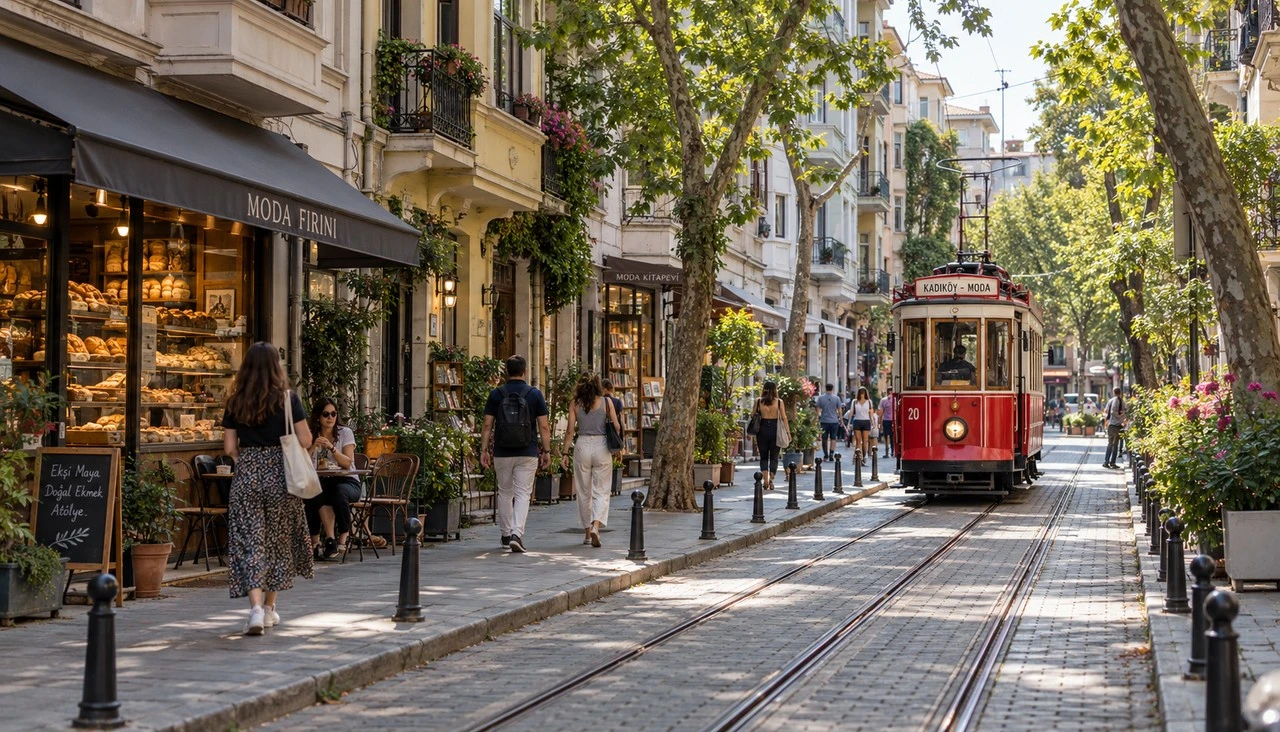
In Istanbul, a station within walking distance is worth more than a larger flat. Traffic is heavy enough that driving across the city often takes longer than the train. Payment works through the Istanbulkart, which covers metro, trams, buses and ferries.
A smaller city with an unusually complete system.
The metro runs along the bay through Konak, and the İZBAN commuter line connects Aliağa in the north with Selçuk in the south, carrying around 100,000 passengers a day. Three tram lines in Karşıyaka, Konak and Çiğli total 33.6 km, and ferries cross the bay between the two shores.
The waterfront districts work best. Living close to the bay puts you within reach of the metro, a tram and a ferry pier at once. What else makes the city attractive is covered in the guide to living in İzmir as an expat.
Here the bus does more work than the rail.
The T1 tram line connects the airport and the EXPO area with the centre and the bus station, the nostalgic T2 tram runs along the cliffs from Işıklar to the museum, and T3 links Varsak with the museum. Buses reach Lara and Konyaaltı beaches frequently, and the AntalyaKart app shows buses in real time. Contactless bank cards also work.
Further along the coast, the centre is everything. In resort towns the network thins out to buses, minibuses and taxis, so an address in or near the town centre decides how often you need a car. The trade-offs are described in the Alanya lifestyle guide.
Long distances are where Turkey surprises newcomers.
Three high-speed lines run from Ankara: to Istanbul in about three and a half hours, to Konya in about 1 hour 15 minutes, and to Sivas in under three hours. The Ankara to İzmir line is under construction, with opening projected for 2027.
Intercity coaches fill the gaps rail does not reach. A dense network of coach companies links almost every town, and domestic flights cover the longer routes. For anyone based in the capital, the guide to living in Ankara shows how the rail hub shapes daily life.
The last kilometre, when walking is not an option.
In Istanbul, Uber works mainly as a booking service for regular yellow taxis, with fares following the meter. BiTaksi operates in several large cities including Istanbul and Ankara, and iTaksi is the Istanbul municipality’s own app.
Outside the big cities, the local taxi rank still rules. In resort towns, save the number of the nearest rank. It is often faster than any app.
Transport is half the question. The other half is shopping.
Most Turkish neighbourhoods are built for walking. A corner grocer, a bakery, a pharmacy and a weekly street market are usually within a few streets, and the weekly market alone covers most fresh food for the week. Large supermarket chains and grocery apps deliver to the door in the cities and most resort towns.
Heavy shopping is what tempts people back to a car. Delivery solves it for water, groceries and household goods, which leaves a car for the occasional trip to a furniture store or a building market, and a taxi or a rental covers those.
The decision is made when you sign the lease or the deed. Six things to check:
The second point is the one people skip. A stop on the map means little if the service runs rarely. Ride the route at the hours you will actually use it before committing. Practical steps for a lease are covered in the guide to renting an apartment in Turkey long term.
A foreign-plated car is a temporary solution.
A tourist can keep a foreign-registered car in Turkey for 90 days within any 180. A residence permit holder can keep it for as long as the permit is valid, up to a maximum of 730 days, and the owner must first have spent at least 185 days outside Turkey in the previous year.
Plan for the end date from the start. Once the period runs out, the car has to leave the country, and overstays are fined. The status that sets these limits is explained in the overview of kimlik and ikamet in Turkey.
The answer depends on how you spend your days.
| Profile | Car-free? |
|---|---|
| Remote worker in a big city | Easily, near a rail line |
| Retiree in a resort town centre | Yes, with buses and taxis |
| Family with school-age children | Depends on the school route |
| Villa owner outside town | Rarely |
| Frequent traveller | Yes, near the airport or a rail hub |
The third row needs the most thought. A school bus service can make a car unnecessary, while a school across town makes one essential. Check the route before choosing the home. Retirees weighing a move will find the wider picture in the guide to retiring in Turkey.
Going car-free is a choice, not a rule.
For a house in the hills, a village outside the season, or regular trips to places without coaches, a car remains the practical answer. Many residents settle on a middle path: they live without one and rent a car for weekends and holidays.
Renting for a weekend is cheaper than owning for a year. For most people in a city or a town centre, occasional rentals cover the trips that public transport does not.
Can you live in Istanbul without a car?
Yes. With 11 metro lines, Marmaray, trams and ferries, most districts near a line are easy to live in without driving.
Is public transport good in Antalya?
Along the tram lines and main bus routes, yes. The T1 tram links the airport with the centre, and buses reach the main beaches.
Why are cars so expensive in Turkey?
Special consumption tax of up to 220 percent and VAT charged on top of it push prices far above European levels.
How long can I keep a foreign-plated car?
Tourists for 90 days in 180. Residence permit holders for as long as the permit is valid, up to 730 days.
Is Uber available in Turkey?
In Istanbul it works mainly as a way to book regular yellow taxis. BiTaksi covers several large cities.
Can I travel between cities by train?
Yes, on the high-speed lines from Ankara to Istanbul, Konya and Sivas. Other routes rely on coaches and domestic flights.
What matters most when choosing a car-free address?
Walking distance to frequent transport and to daily shops.
Start with the map of transport, not the map of districts. Mark the stations, tram stops and ferry piers you would actually use, then look for homes within a ten-minute walk of them. Everything else, from the view to the floor plan, can be chosen inside that circle. DDA Real Estate is a real estate agency in Turkey. We help buyers and tenants from abroad find homes in Turkey and look at each property through the way they will actually live in it, including how they will get around.
Look at our offers in Turkey and leave a request: tell us which city you are considering and whether you plan to live without a car, and we will shortlist homes close to the lines that matter. Running costs are part of the picture too, as set out in the guide to utilities in Turkey.