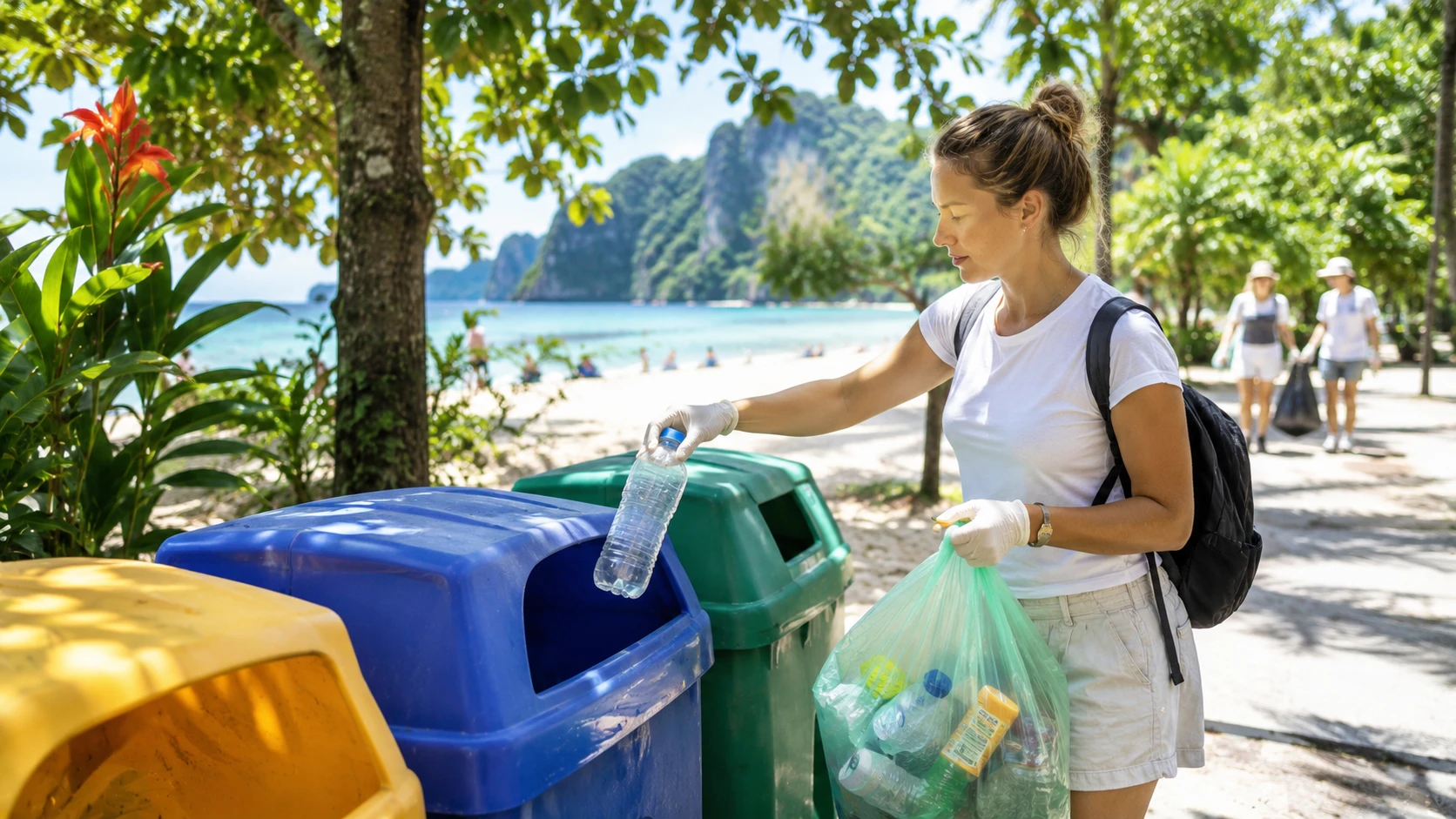
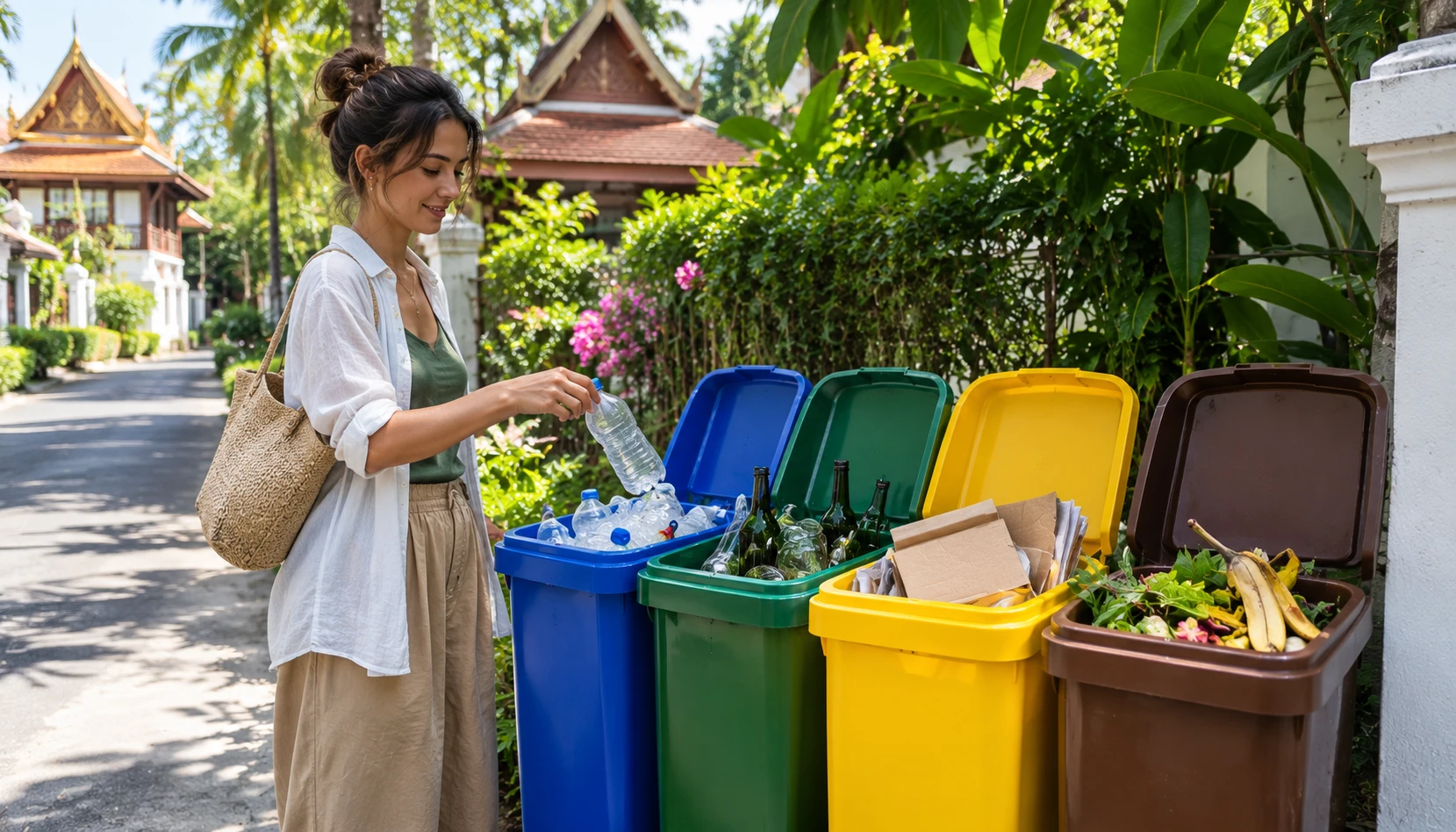
Arrivals look for the recycling bins and conclude there is no recycling here. There is a great deal of it, but almost none of it happens in bins — it is done by people who make a living from what has value in your rubbish.
Municipal collection is largely mixed. The sorting happens before and after it: collectors on carts, building staff, and buy-back shops that weigh material and pay cash for it.
So recycling properly here does not mean finding the right bin. It means making your waste easy for that system to use. Below is what has value, what does not, and how the arrangements differ between a condominium, a house and a village. Practices vary by municipality, so check what applies locally.
What has value and what does not
This is the whole practical core. Material that a buy-back shop will weigh gets recycled; material that will not gets buried:
| Material | Value to collectors | What to do |
|---|---|---|
| Aluminium cans | Highest by weight | Rinse, keep separate, never crush flat |
| PET bottles | Good, if clean and dry | Empty, dry, caps off |
| Cardboard and paper | Modest, by weight | Keep dry, flatten and tie |
| Glass bottles | Varies, some are returnable | Keep whole, not broken |
| Mixed and soft plastics | Little or none | Reduce these at source |
| Food-soiled packaging | None | Ordinary rubbish |
Contamination is what kills value. A rinsed bottle is recycled and the same bottle with sauce in it is not, which makes rinsing the single most useful habit.
The informal system and how to help it
Collectors work fixed rounds, often early in the morning, and they take what they can sell. Building cleaners do the same with what passes through their hands.
If you put valuable material into a separate bag beside the bin rather than inside it, it is taken within hours and never reaches landfill. A clear bag of clean cans set beside the rubbish is a complete recycling system, and it costs you nothing.
Buy-back shops
Most neighbourhoods have a yard that buys recyclable material by weight. Anyone can sell to them, including households.
For a household the money is negligible, but the shop is useful for the things ordinary collection does not take: quantities of cardboard after a move, metal, old appliances. For a house move or a renovation, a buy-back yard solves the disposal problem for free and often collects.
What a condominium arrangement looks like
In a building the waste is handled for you, which is convenient and also the reason most residents never think about it.
There is usually a chute or a room per floor, staff who consolidate, and a contract managed by the building. Whether any separation happens depends entirely on that building's practice. The service sits inside the monthly charges described in the breakdown of electricity, water and internet bills. Ask whether the building separates anything, because many do it well and some do not at all.
A house is a different arrangement
With a house you deal with the municipality directly. Collection days are fixed, a bin or bag goes out at a set point, and a modest fee is paid to the local office.
New arrivals sometimes discover that the previous occupant never registered, so nothing is collected. That difference between building living and house living runs through many everyday arrangements, as the comparison of a condominium and a villa sets out. Ask the neighbours which day the truck comes and where the bin goes — that is faster than any office.
Rural areas may have no collection
Outside towns there may be no municipal service at all. Households burn what burns and bury or dump the rest, and this is normal rather than exceptional.
Anyone taking a rural property should ask what happens to waste before signing, along with the other self-provided services covered in the account of living off-grid in Thailand. Private collection can usually be arranged for a monthly fee, and it is worth arranging rather than adopting the local habit.
Burning is a neighbourhood issue
Garden waste and household rubbish are burned widely, especially in the dry months, and the smoke sits low in the evening.
For a buyer this is worth noticing at a viewing, because a lane where everyone burns in the evening is a different place to live from one where nobody does. Visit a shortlisted address at dusk, not only at midday. It is also when you learn what the neighbours cook and how the dogs behave.
The bottled water problem
Most households here drink bottled water, and for a family that is a large volume of plastic every week. It is the single biggest waste stream a foreign resident generates.
Two alternatives cut it almost entirely: the large returnable jugs delivered to the door, and a home filter. The trade-offs are set out in the guide to drinking water in Thailand. Switching to returnable jugs removes more plastic than any amount of careful sorting adds.