Off-plan properties
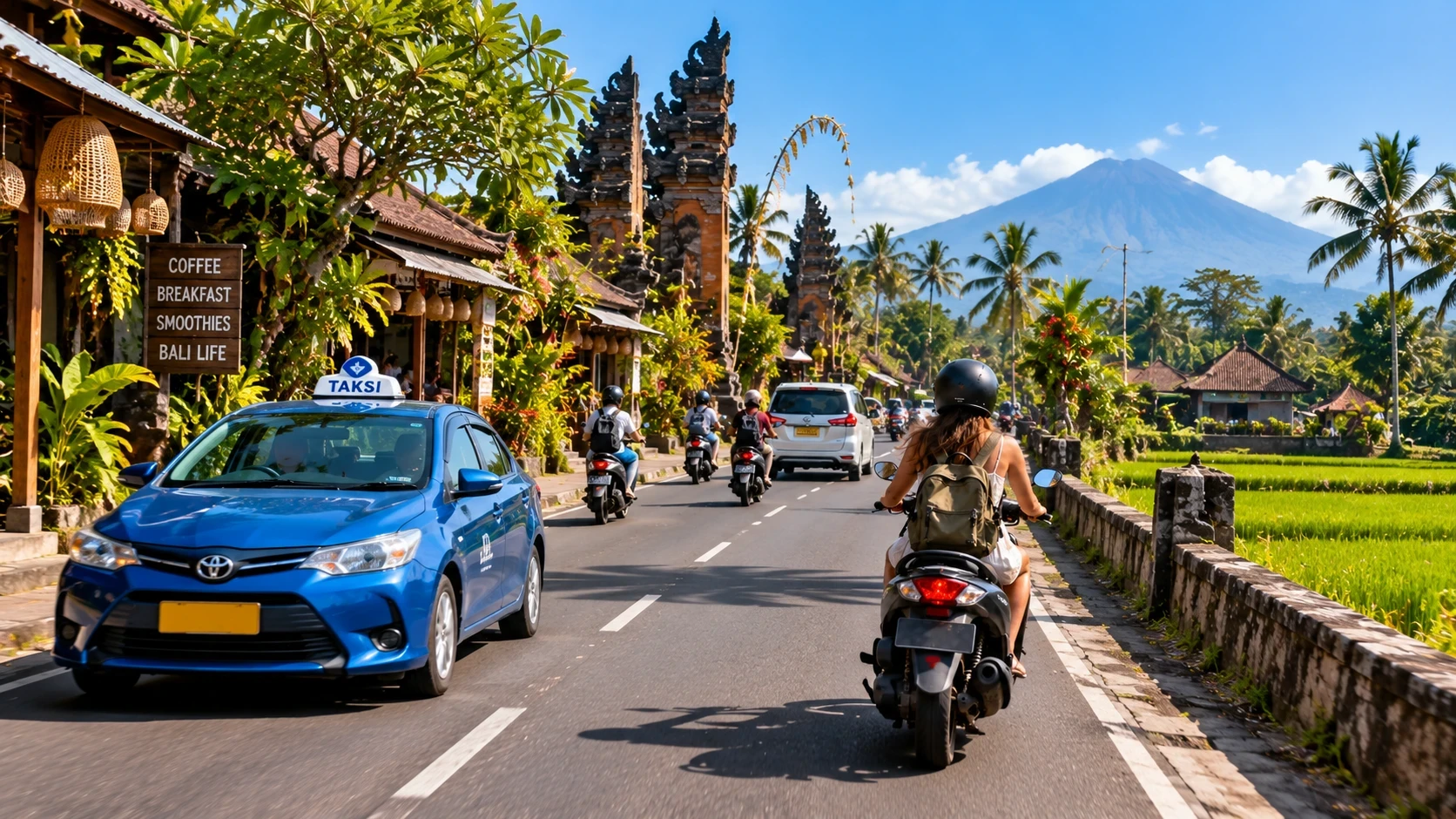
Getting around Bali is easy once each trip gets the right type of transport. The island has no metro and no dense bus grid. Most people move by car and scooter along a small number of main roads. Ride-hailing apps, private drivers, rental scooters, buses and boats fill different roles.
This guide sorts the options by situation. It covers the airport, short daily trips, full-day tours, island boats and long stays. It also shows who carries the risk when a trip goes wrong and what you can arrange for free before the flight.
The tourist south of Bali sits on a narrow strip between the airport, Kuta, Seminyak and Canggu. A few arterial roads carry almost all traffic there. Side streets are narrow and often end at rice fields or private compounds. Distance on the map says little about travel time in Bali. The same short trip can take a few minutes at dawn and many times longer in the evening peak.
The Bukit peninsula, Ubud and the quieter north each follow their own pattern. The Bali Mandara toll road crosses the bay and links the airport area with Nusa Dua and Benoa. It carries both cars and motorbikes and is the fastest route between those points.
The best option changes with the purpose of the trip. Most visitors combine two or three types of transport, each for its own kind of trip. The table shows a starting choice for common situations.
| Situation | Best option | What to arrange |
|---|---|---|
| Arrival at the airport | Ride-hailing car or pre-booked transfer | Book in the app at the pickup lounge or agree a transfer before the flight |
| Short trips within one area | Ride-hailing motorbike or car | Install the apps and link a payment card |
| Full-day tours | Private driver | Agree hours, route and what the price includes |
| Daily life over weeks or months | Scooter, or a car with a driver | Carry a permit with the motorcycle category and check insurance |
| Trips to Nusa Penida, Lombok or the Gilis | Fast boat | Buy a ticket that includes the hotel transfer |
| Budget trips between main hubs | Trans Metro Dewata bus | Check the corridor and service hours |
The airport lies in the south, close to Kuta, Jimbaran and the toll road. Grab and Gojek run official lounges in the arrival pickup zone of both terminals. A passenger books a ride in the app and walks to the lounge, where staff help find the driver. The official pickup lounges remove the need to bargain with drivers at the exit.
The airport also has a taxi counter with fixed fares. Many hotels and villas arrange transfers on request. A pre-booked driver suits families with luggage, late-night arrivals and trips to Ubud or the north.
Grab and Gojek are the main apps on the island. Both offer motorbike and car rides, food delivery and courier service. The fare appears before booking, so there is no negotiation. For short trips inside one area, ride-hailing is the simplest and usually the cheapest choice.
Gojek often shows lower fares for motorbike rides. Grab tends to accept foreign bank cards more reliably. Bluebird, the largest metered taxi company, takes bookings through its own app, and Bali taxi services and their prices vary by company and time of day. Mobile data matters for all of them, so a local SIM card or eSIM pays off from the first day.
In some places local transport cooperatives stop app drivers from picking up passengers. This happens most often on the Bukit peninsula around Uluwatu, Bingin, Padang Padang and Ungasan. Central Ubud and parts of Canggu see similar limits. Drop-offs usually work, and the problem appears on the way back. Officials have confirmed that tourists may legally use the apps. The limits come from local practice.
In a restricted zone, plan the return trip together with the outward one. A driver can wait at the venue. A local taxi stand works for short distances. Hotels and beach clubs also know which nearby pickup points accept app drivers.
Hiring a car with a driver for a full day is a common practice in Bali. The driver plans the route, waits at each stop and deals with parking. This suits trips to the rice terraces, temples, waterfalls and mountain lakes of the centre and north. For a family or a group, a day driver is often more practical than a chain of separate app rides.
The price usually covers a set number of hours. It helps to confirm in writing whether fuel, parking, entry tickets and overtime are included. A driver who knows the route also helps to time each stop around crowds and weather.
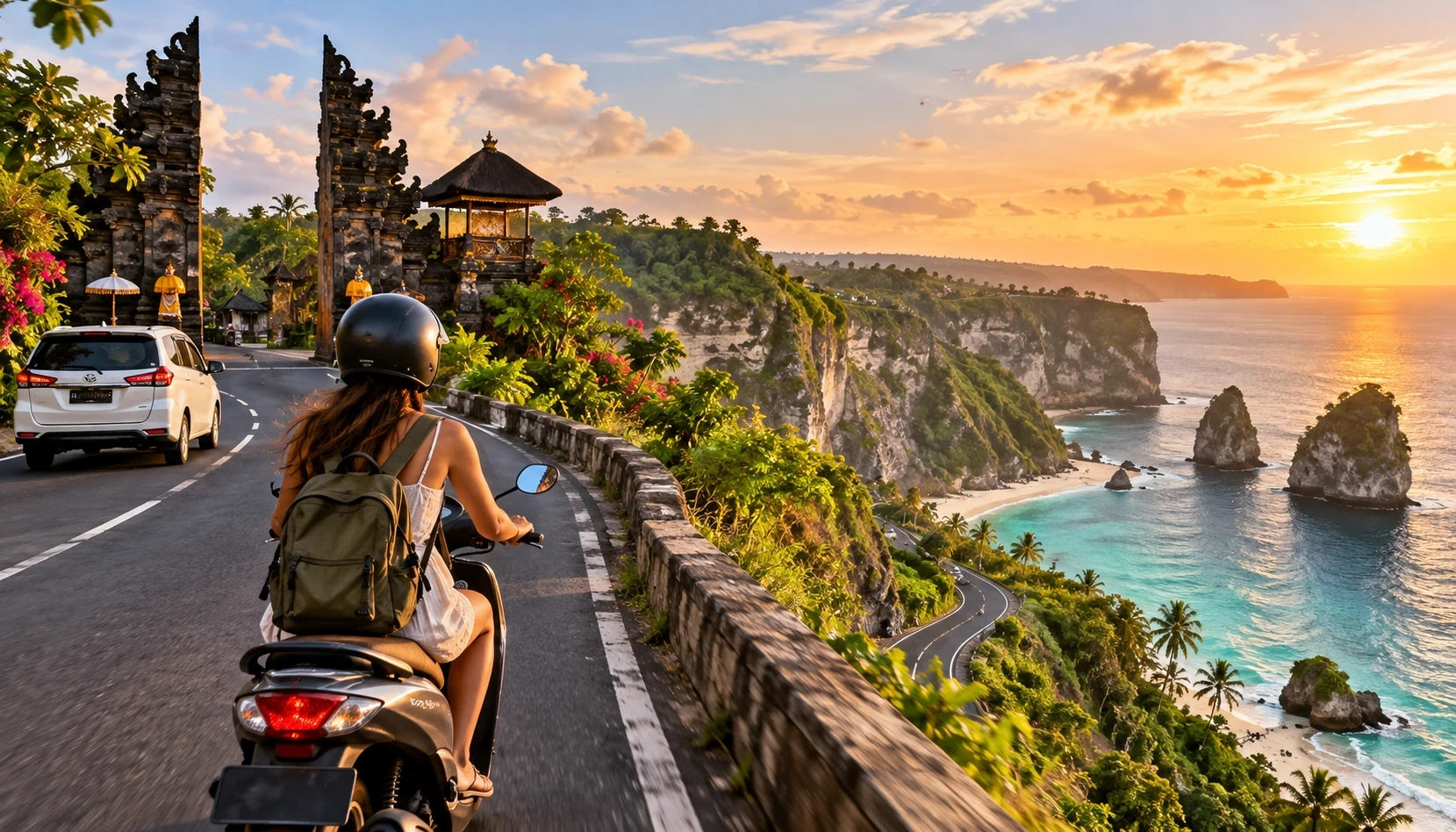
Scooters are the most flexible way to move around Bali. They pass through traffic and park almost anywhere. For a newcomer they also carry the most risk. Indonesian rules treat a scooter as a motor vehicle, and the rider needs a valid licence for that category. Before riding, a foreign visitor should carry these documents:
Police run checkpoints on busy roads in tourist areas. In 2023 the provincial government proposed a ban on scooter rentals for tourists. Rentals to foreign visitors have continued, and the focus has moved to document checks. A licence that covers cars only does not cover a scooter.
Responsibility on Bali roads splits between the rider, the rental company and the insurer. The rental contract usually makes the renter liable for damage and theft. Travel insurance covers a scooter accident only when the rider held a valid licence for the vehicle. Without the right licence and permit, an insurer may refuse both medical and liability claims. That cost can far exceed any police fine.
Some rental shops ask to keep a passport as a deposit. A cash deposit and a copy of the passport are a safer arrangement. With a hired driver the passenger does not drive at all, so the licence question does not arise.
Self-drive car rental is available across the south. Roads are narrow, traffic keeps to the left and parking in busy areas is scarce. Many visitors book a car with a driver to avoid parking and navigation. Self-drive pays off mainly for long stays and for trips outside the busy south.
The documents for self-drive follow the same logic as for scooters. The licence and the permit must include the car category. Car rental costs and required documents in Bali depend on the car class and the rental term.
Trans Metro Dewata is the public bus network of Bali. It runs on six corridors that link Denpasar, Kuta, Sanur, Nusa Dua, Ubud and the airport. As of 2026, a standard fare is Rp4,400 per trip. Buses run from early morning to early evening, and the timetable depends on traffic. The provincial government and the district governments fund the service together for 2026.
The bus works well for budget trips between main hubs and rarely reaches a villa door. For the last stretch, most passengers combine it with an app ride.
Most transport problems in Bali follow the same chain. One small issue at the start grows during the day. A typical sequence looks like this:
Most of this chain breaks when the day starts early and the return is arranged in advance. An early start also brings softer light and cooler weather at outdoor sights.
The rainy season in Bali usually runs from November to March. Heavy showers come in the afternoon and evening and flood low streets for a short time. Scooter trips become slower and less safe. App fares can rise during a downpour, as demand jumps and fewer motorbike drivers stay on the road. During the wet months travel times grow, and each trip needs a larger margin.
Fast boats to Nusa Penida and Nusa Lembongan leave from Sanur. Boats to the Gili islands and Lombok leave from Padang Bai, Serangan and other harbours on the east coast. Many operators include a hotel transfer in the ticket. A ticket with the land transfer included removes the hardest part of an island trip.
Sea conditions can delay or cancel a crossing, so a spare day before an international flight is wise. On the Gili islands of Trawangan, Air and Meno there are no cars, and people move on foot, by bicycle or by horse cart.
Public car ferries cross from Gilimanuk in the west of Bali to Ketapang in East Java. They run around the clock. Padang Bai also has a car ferry to Lembar on Lombok. A ferry is the way to take your own car or scooter off the island. Queues grow on long weekends and public holidays, so an early departure saves hours.
Several transport questions cost nothing to solve at home and much more to solve on the island. These steps take little time before the flight:
An International Driving Permit is issued in the country of your licence, so it has to be done before departure. The other steps can wait, but they save the first day on the island.
For anyone who plans to live in Bali or buy property, transport becomes a daily factor. A villa on a quiet lane can sit far from a main road in travel time. Access to the main road, the drive to schools and shops and the pickup rules in the area all shape daily life. They also shape rental demand, because guests compare travel times before booking.
Each of Bali's main areas for living and investing has its own traffic pattern and transport options. Good road access can support a property's value as well as its rental appeal.
Bali has a long-discussed plan for a rail line. The first phase would link the airport with Cemagi, north of Canggu, and later with Nusa Dua. A groundbreaking ceremony took place in September 2024. As of April 2026, main construction had not started, and the first line is targeted for 2028. Transport decisions in Bali today rest on the road network. Buyers who follow the project can note which areas lie near the planned route.
Can tourists rent a scooter in Bali in 2026?
Yes. Rentals to foreign visitors continue. The rider needs a national licence and an International Driving Permit that both include the motorcycle category.
Which app works better in Bali, Grab or Gojek?
Both work across the south and in Ubud. Gojek often shows lower motorbike fares. Grab tends to accept foreign cards more reliably. Many visitors keep both.
How do I get from the airport to my hotel?
Book a Grab or Gojek ride and walk to the official lounge in the arrival pickup zone. The taxi counter and a transfer arranged by the hotel are other options.
Is there public transport in Bali?
Yes. Trans Metro Dewata buses run on six corridors in the south and to Ubud. As of 2026, a standard fare is Rp4,400 per trip.
What should I do if an app driver cannot pick me up?
Check whether you are in a restricted zone. Walk to a main road outside it, use a local taxi stand or ask the hotel to call a driver.
DDA Real Estate selects villas and apartments in Bali with daily travel in mind. For each option we compare access to main roads, beaches, schools and shops. We check the legal status of every property before the buyer pays a deposit.
Explore our properties in Indonesia and leave a request: we will shortlist options in areas that fit your daily routes, arrange viewings and plan the transfers between them.