
Off-plan properties
Most interruptions here are not emergencies. They are planned, scheduled and announced days in advance — on a noticeboard by the entrance, on a local social media page, or on a printed sheet in Thai taped to a pole.
Foreign residents miss them because they are not reading those channels. The cut then arrives as a surprise, and the surprise is the expensive part rather than the outage itself.
The second thing worth knowing is that the two problems are one problem. Below is why, how to find the schedule, what to keep at home, and what to check in a property before you sign. Practices vary by area and building, so confirm the specifics locally.
Almost every building here lifts water with an electric pump. Cut the power and the pump stops, so the water stops within minutes of the tank draining down.
A house on a well is the same story with fewer steps: no electricity, no borehole pump, no water at all. So a power cut is a water cut in almost every case, and planning for one without the other leaves you with a charged laptop and no shower.
Three different things get called an outage, and they need different responses:
| Type | Typical cause | Warning |
|---|---|---|
| Planned | Grid or pipe maintenance | Days in advance, if you read the right channel |
| Unplanned | Storms, fallen branches, faults | None, usually short |
| Seasonal water shortage | Dry-season supply pressure | Gradual, worst late in the dry months |
| Building-level | Pump failure, tank cleaning, unpaid bills | Varies, often a notice in the lift |
The seasonal one is the only kind that lasts. Storm outages are measured in hours. A dry-season shortage in a well-fed area can run for weeks with water arriving by truck.
This is the practical fix and it takes an afternoon to set up. Notices go out through channels most foreigners never open:
Most notices are in Thai only. A translation app handles them, and a few words make asking a neighbour easier — the survival phrases worth learning cover enough for this. Follow the two local authority pages on the day you move in.
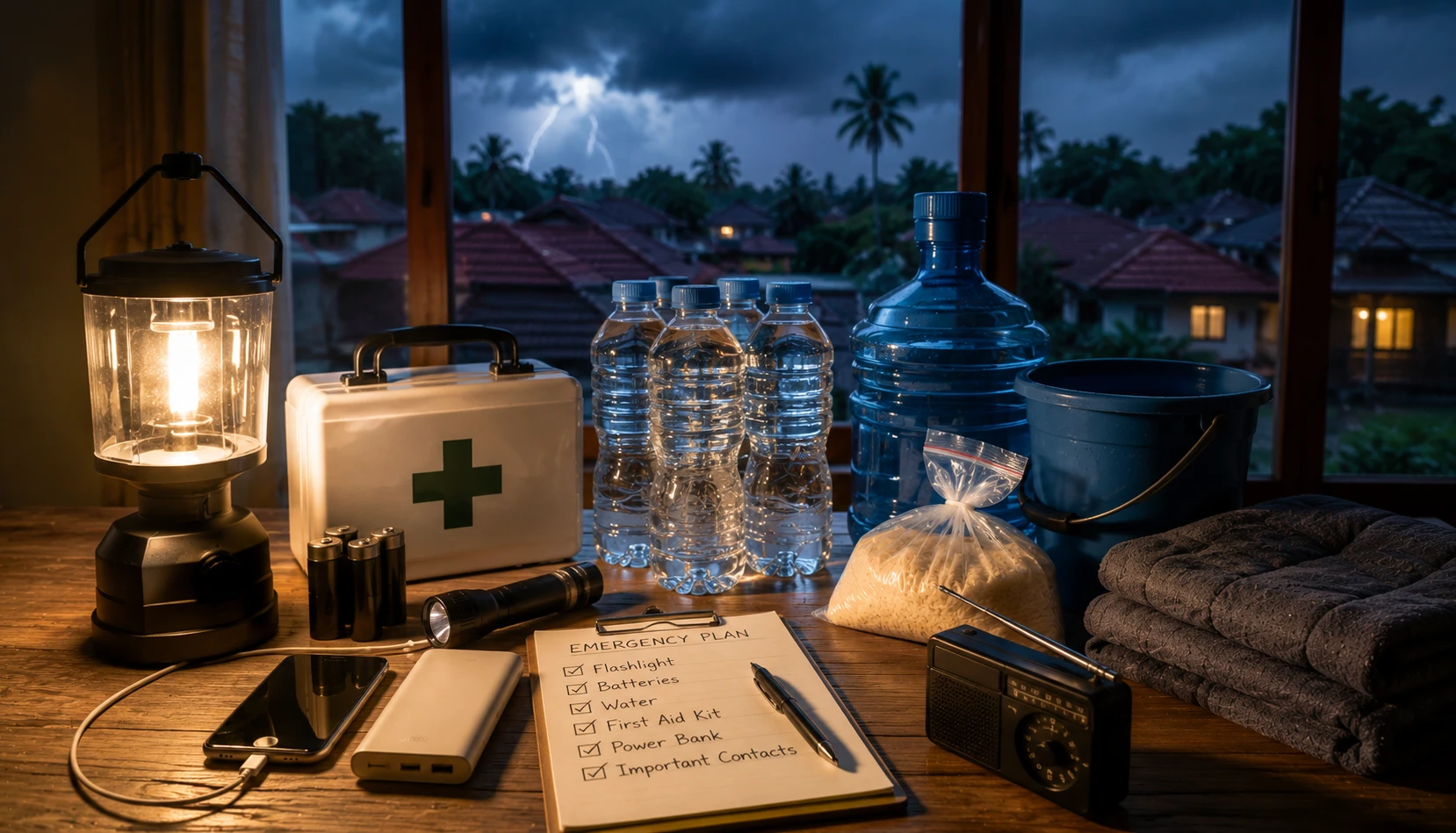
The list is short and cheap, and every item earns itself back the first time it is used:
The bucket matters more than anything else on the list. A filled bucket flushes a toilet, and that is the thing people miss within the first hour.
If you know it is coming, twenty minutes of preparation removes most of the discomfort:
A closed fridge holds its temperature for several hours. Opening it to check is what ruins the contents, and it is the commonest mistake.
Short outages are ordinary and need no reaction. The useful reflexes are about equipment rather than comfort.
Switch off air conditioners and anything with a motor at the wall, because the surge when power returns is what damages them. Leave one light switched on so you know the moment supply is back. Report the fault rather than assuming someone else did: in a building tell the juristic office, in a house call the local authority office, and if only your unit is affected check your own breaker first.
In the driest months some areas run short, and this is normal rather than a crisis. Pressure drops, supply becomes intermittent, and households on wells watch their level fall.
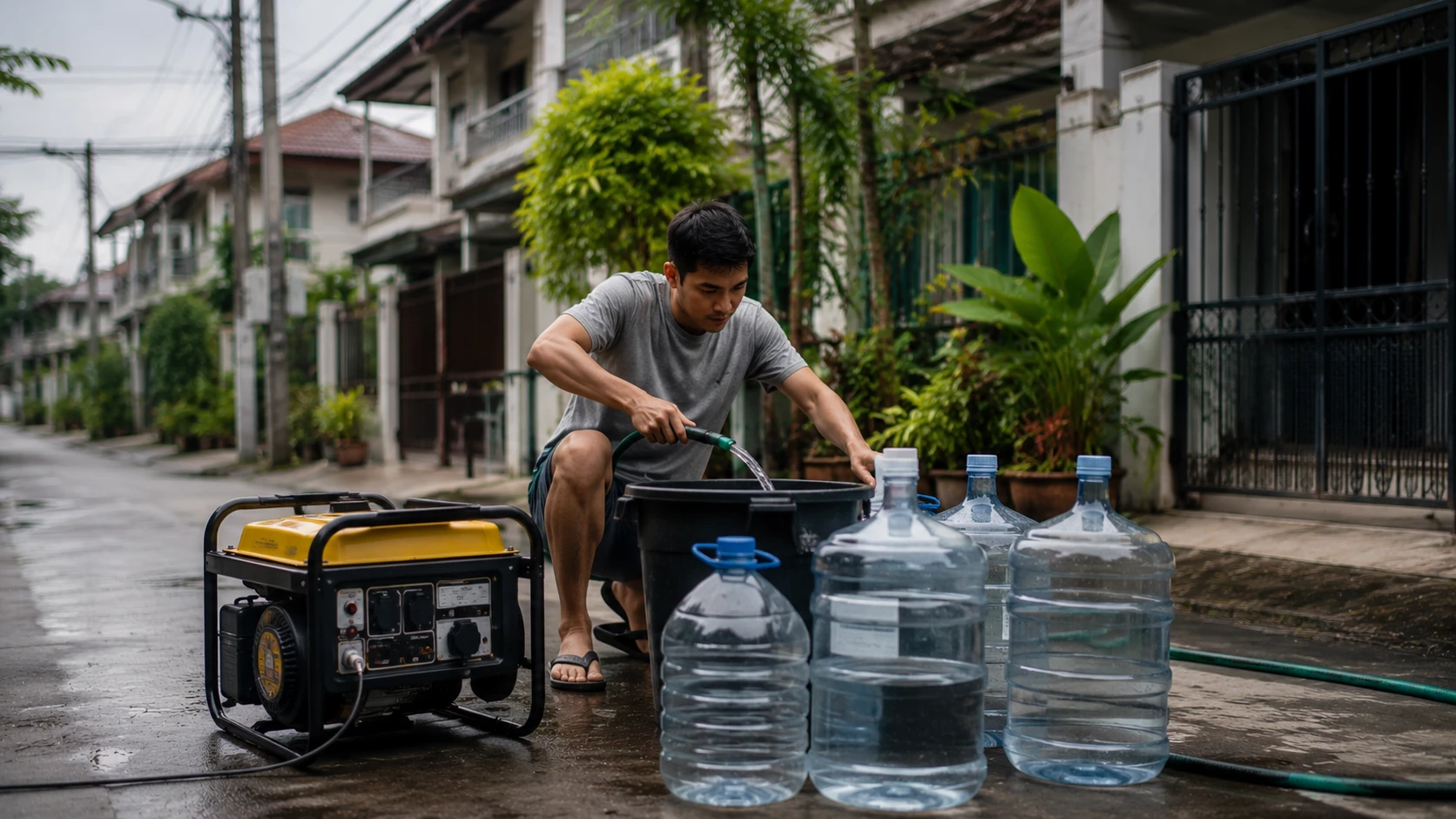
The standard solution is delivered water: a truck fills your tank for a modest fee. Everyone in affected areas has a number for one. Get that number before you need it, because in a bad week the wait can run to days. Areas that rely on this every year know it, and the neighbours will tell you plainly if you ask.
Storage is what separates a household that notices an outage from one that does not. A building with a large ground tank and a roof tank can run for hours or days on what it holds.
The same tanks are where most water quality problems begin, which is covered in the guide to water systems in a Thai home. Ask how many hours the building's storage covers. «A few hours» and «a full day» are very different answers when the pump is down.
For most residents in towns, nothing beyond a power bank is justified. Outages are short and infrequent enough that hardware sits idle.
It changes if you work from home, live on an island, or run a property with guests. Then a battery unit for the router and a few lights is modest and useful, and a generator makes sense for a villa with a pool pump and a full fridge. Independent supply as a whole is covered in the account of living off-grid in Thailand. Size it to what you actually need running, which is usually the router, the fridge and one fan.
An outage during a guest's stay becomes a review, and a review lasts longer than the outage. The difference between a complaint and a shrug is preparation that costs very little.
Leave a torch and a power bank in the unit, put the water delivery number and the emergency contacts where a guest will find them, and write one short line in the house rules explaining that brief cuts are normal here. Tell guests before it happens rather than apologising after. Expectation set in advance is not a complaint.
These questions take five minutes at a viewing and are almost never asked:
Ask a neighbour rather than the seller. The answer will be more accurate and it costs you nothing.
One cause of an outage is administrative rather than technical: an unpaid bill. In a rented property this is usually the landlord's account, and a tenant can be cut off for someone else's oversight.
Establish who pays which utility and how, and keep the receipts. What to expect from the utility side of a home is set out in the breakdown of electricity, water and internet bills. If you pay through the landlord, ask to see the actual bills — it protects you against both overcharging and disconnection.
Everything above applies more strongly away from the mainland grid. Supply is thinner, repairs take longer, and a fault that is fixed in an hour in a city can take a day on an island.
Redundancy stops being optional at that point. Larger tanks, a battery for the essentials and a standing relationship with a water supplier are ordinary parts of running a house there, not preparation for disaster.
How often does the power go out?
It varies enormously by area. Central city districts see occasional short cuts; islands and rural areas see them more often and for longer. The honest way to find out is to ask people who live on that street rather than to look for a national figure.
Why does the water stop when the power does?
Because an electric pump moves it. Buildings pump to a roof tank and houses pump from a well, so no electricity means no pressure once the stored water runs down. This is why the two problems are really one.
Do I need a generator?
Most town residents do not. Consider one if you work from home, live on an island, or let the property to guests. Even then a battery unit for the router and a few lights covers most situations at a fraction of the cost.
Is tank water safe after an outage?
It can be discoloured when supply returns and sediment is disturbed. Run a tap for a minute before using it. If discolouration persists, the tank needs cleaning, which is a separate maintenance question.
What if the outage is only in my unit?
Check your own breaker first, then ask a neighbour whether they have power. If they do, it is your circuit or an unpaid account rather than a grid fault, and the fix is a different phone call.
It is a five-minute question at a viewing and it tells you what daily life in that building is like. DDA Real Estate is a real estate agency working in Thailand, and this is part of what we check alongside the price: what the building stores, whether there is a generator and what it actually powers, whether a house is on mains water or a well, and what the area does in the dry season.
Look at our offers in Thailand and leave a request: we will shortlist properties that hold up when supply is interrupted, tell you what each address is really like in the dry months, and be straightforward about the ones where you would need equipment to live comfortably.