Off-plan properties
Two different phenomena are both called flooding here, and buyers usually worry about the wrong one. The everyday kind is a drainage problem. The catastrophic kind is a river problem, and it is rare.
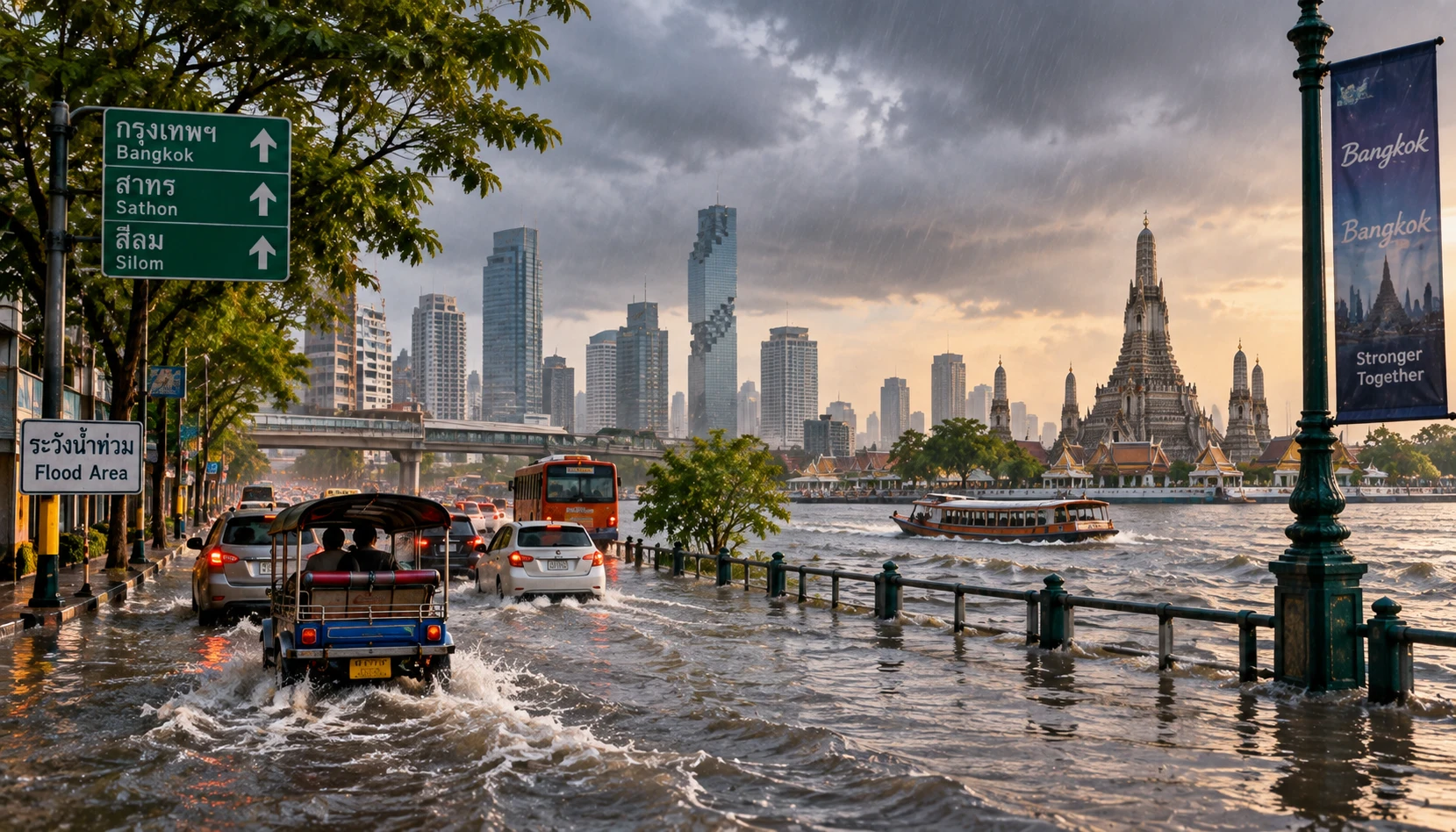
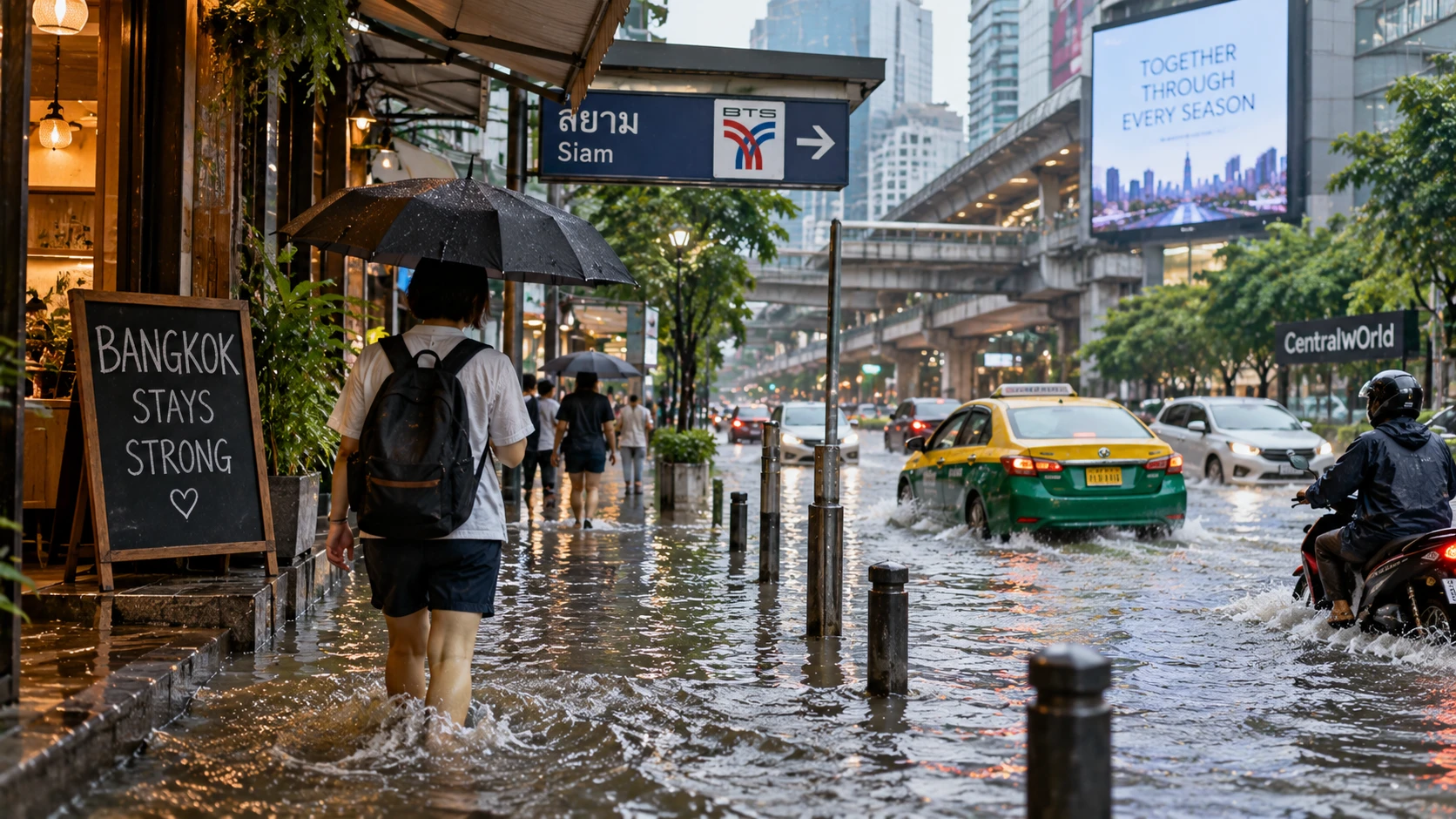
Bangkok's ordinary flooding happens when an hour of heavy rain overwhelms the drains. Streets fill, traffic stops, and the water is gone by evening. It happens many times a season and almost never enters buildings.
Below is how to tell the two apart, why the best predictor of risk is not a flood map, and what to check at a viewing. Conditions vary by district and change as drainage works are built, so treat this as the pattern rather than a forecast.
Separating them changes what you should look at when choosing where to live:
| Drainage flooding | Basin flooding | |
|---|---|---|
| Cause | Rain faster than the drains can take | Prolonged upstream rain and river volume |
| Frequency | Many times each wet season | Rare, years or decades apart |
| Duration | Hours | Weeks |
| Depth | Ankle to knee on the street | Can enter ground floors |
| What it affects | Traffic, errands, parking | Property, utilities, access |
Almost everything a resident experiences is the left column. Almost everything written about Thai flooding describes the right one.
Bangkok sits on a flat delta barely above sea level, built on soft ground that has been subsiding for decades. Drainage relies on pumps and canals rather than on gravity.
That combination means the system copes with steady rain and struggles with sudden intensity. A short violent downpour floods streets that a whole day of light rain would not, which is why residents watch the radar rather than the forecast.
Flood maps are coarse and quickly dated. The most reliable indicator at a viewing is simple and physical: where the building's ground level sits relative to the road outside.
Roads here have been raised repeatedly over the years, so older houses now sit below the surface of the street they face. Water runs downhill into them. Stand at the gate and look at whether you step up or down into the property. That single observation tells you more than any map.
The lane matters as much as the building, and the signs are visible on a dry day if you know them:
Stored sandbags are the clearest answer you will get. Nobody keeps them for a problem they do not have.
An apartment on the tenth floor does not flood. The building around it can still stop working, and that is the risk a buyer should actually price.
Underground parking is the vulnerable part, along with generators, pumps and electrical rooms if they sit at or below ground level. Ask where the electrical room and the pumps are, and what happens to the car park in heavy rain. These belong on the same list as the other things worth asking about security and building management in Thai condominiums.
Flooding rarely arrives alone. Substations are shut down as a precaution, lifts stop, and the pumps that supply water to a building's roof tank stop with them.
So a flooded street can mean a dry tap several floors up. How those interruptions work and what to keep at home is set out in the guide to power cuts and water shortages. Assume any serious flood day is also an outage day and prepare once for both.
Coastal flooding is not heavy rain overwhelming drains. It is the sea arriving where it does not usually reach, driven by storm surge, high tides and long-term erosion.
Parts of the Gulf coast have lost beach over decades, and seawalls mark where the shoreline used to be. Which towns are exposed and which sit behind natural protection is part of the picture of quieter beach towns in Thailand. On the coast, ask what the shoreline looked like twenty years ago, because that trend continues.
A first-line position carries a price premium and a maintenance burden that buyers underestimate. Salt, wind and spray attack everything metal and everything painted.
Add surge risk and erosion and the annual cost of the same building is higher than one set back a few hundred metres. Price the second row honestly against the first: the view costs money every year, not only at purchase.
Damage is rare. Disruption is constant, and it is what shapes daily life in the wet months.
Traffic collapses, motorbike taxis stop, deliveries fail, schools sometimes close early, and a twenty-minute journey becomes two hours. Judge a location by how it behaves on a bad afternoon, not by whether water has ever entered the building. The second almost never happens; the first happens often.
The rains build from around May and peak late in the season, with the heaviest and most flood-prone weeks usually in September and October.
That peak coincides with high tides in the river, which is why the worst street flooding clusters in a few autumn weeks rather than spreading evenly. If you are viewing property, September and October show you the honest version of an address.
No amount of research substitutes for having been there in the wet season. A year's lease before a purchase settles the question for the specific street you care about.
Ask neighbours rather than the seller. Anyone who has lived on the lane for five years will tell you plainly how often it floods and how deep, and they have no reason to soften it.
Flood cover in Thailand changed after the large losses of the last major basin flood. Policies now commonly limit or exclude it, and where it is included the sub-limit can be modest.
Read what the policy says about flood specifically, not what the summary says about natural disasters. For a ground-floor property or a house with a basement, this is worth checking before the purchase rather than after.
Most of what helps is cheap and permanent, and it is done in the dry season rather than the week the water arrives:
Drainage has been improving for years. Tunnels, pumping stations and retention areas have been added, and districts that flooded reliably a decade ago now clear faster.
This matters when you read older accounts of a neighbourhood. A reputation for flooding can outlast the problem by years, and occasionally the reverse happens where new construction has changed how water moves. Trust recent local accounts over articles and reputations.
This is where the risk actually sits. A house or townhouse takes water at floor level in a way an apartment never does, and the cost lands on the owner rather than the building.
Older houses on lanes that have been resurfaced repeatedly are the most exposed, because the road has risen around them. For a house, the height of the floor above the lane is worth more than any other feature of the plot, and it cannot be changed afterwards.
Residents adapt quickly and stop noticing. Rain shoes by the door, a rain jacket on the bike, and a habit of checking the radar before leaving cover most of it.
The adjustment is to the schedule, not to the property. People who plan errands around the afternoon downpour find the season far easier than those who fight it.
Does Bangkok flood every year?
Streets flood many times each wet season, usually for a few hours after intense rain. That is a drainage issue rather than a disaster. Basin-wide flooding that enters buildings for weeks is rare and separated by years.
How do I judge a specific address?
Stand at the gate and see whether you step up or down from the road, look for tide marks and stored sandbags in the lane, and ask neighbours who have lived there for years. That beats any flood map.
Are condominiums safe from flooding?
The apartment itself, yes. The building can still lose its car park, lifts, water pumps and power. Ask where the electrical room and pumps sit and what happens to underground parking in heavy rain.
What about coastal property?
That is a different risk: storm surge, high tides and long-term erosion rather than drainage. Ask what the shoreline looked like twenty years ago, and price the extra maintenance that salt and spray impose on a first-line building.
When is the worst period?
Usually September and October, when the heaviest rain coincides with high tides in the river. If you can view property then, you see the honest version of a location rather than its dry-season self.
It takes five seconds and tells you more about an address in the wet season than a page of research. DDA Real Estate is a real estate agency working in Thailand, and this is part of what we look at on your behalf: how the ground sits relative to the lane, what the neighbours say about the last few seasons, where a building keeps its pumps and electrics, and how the street behaves on a bad afternoon.
Look at our offers in Thailand and leave a request: we will tell you how each address handles the wet months, in plain terms, and say when a location would mean rearranging your life for two months a year.