Two different phenomena are both called flooding here, and buyers usually worry about the wrong one. The everyday kind is a drainage problem. The catastrophic kind is a river problem, and it is rare.
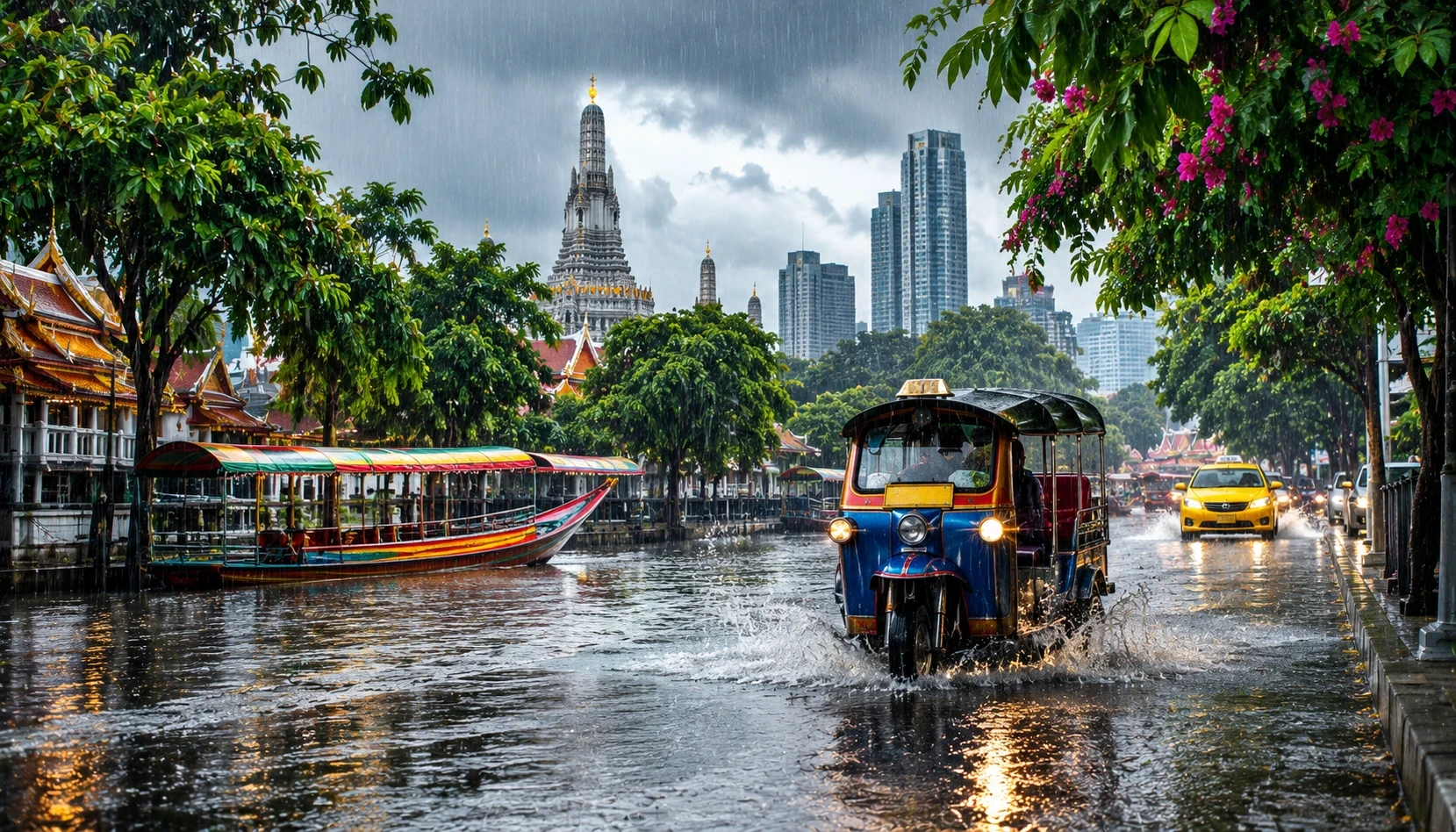
Bangkok's ordinary flooding happens when an hour of heavy rain overwhelms the drains. Streets fill, traffic stops, and the water is gone by evening. It happens many times a season and almost never enters buildings.
Below is how to tell the two apart, why the best predictor of risk is not a flood map, and what to check at a viewing. Conditions vary by district and change as drainage works are built, so treat this as the pattern rather than a forecast.
The two kinds, side by side
Separating them changes what you should look at when choosing where to live:
| Drainage flooding | Basin flooding | |
|---|---|---|
| Cause | Rain faster than the drains can take | Prolonged upstream rain and river volume |
| Frequency | Many times each wet season | Rare, years or decades apart |
| Duration | Hours | Weeks |
| Depth | Ankle to knee on the street | Can enter ground floors |
| What it affects | Traffic, errands, parking | Property, utilities, access |
Almost everything a resident experiences is the left column. Almost everything written about Thai flooding describes the right one.
Why the city floods so easily
Bangkok sits on a flat delta barely above sea level, built on soft ground that has been subsiding for decades. Drainage relies on pumps and canals rather than on gravity.
That combination means the system copes with steady rain and struggles with sudden intensity. A short violent downpour floods streets that a whole day of light rain would not, which is why residents watch the radar rather than the forecast.
The best predictor is the road
Flood maps are coarse and quickly dated. The most reliable indicator at a viewing is simple and physical: where the building's ground level sits relative to the road outside.
Roads here have been raised repeatedly over the years, so older houses now sit below the surface of the street they face. Water runs downhill into them. Stand at the gate and look at whether you step up or down into the property. That single observation tells you more than any map.
What to look at in the soi
The lane matters as much as the building, and the signs are visible on a dry day if you know them:
- Water stains or a tide line on walls and gateposts
- Front gardens and driveways raised above the lane
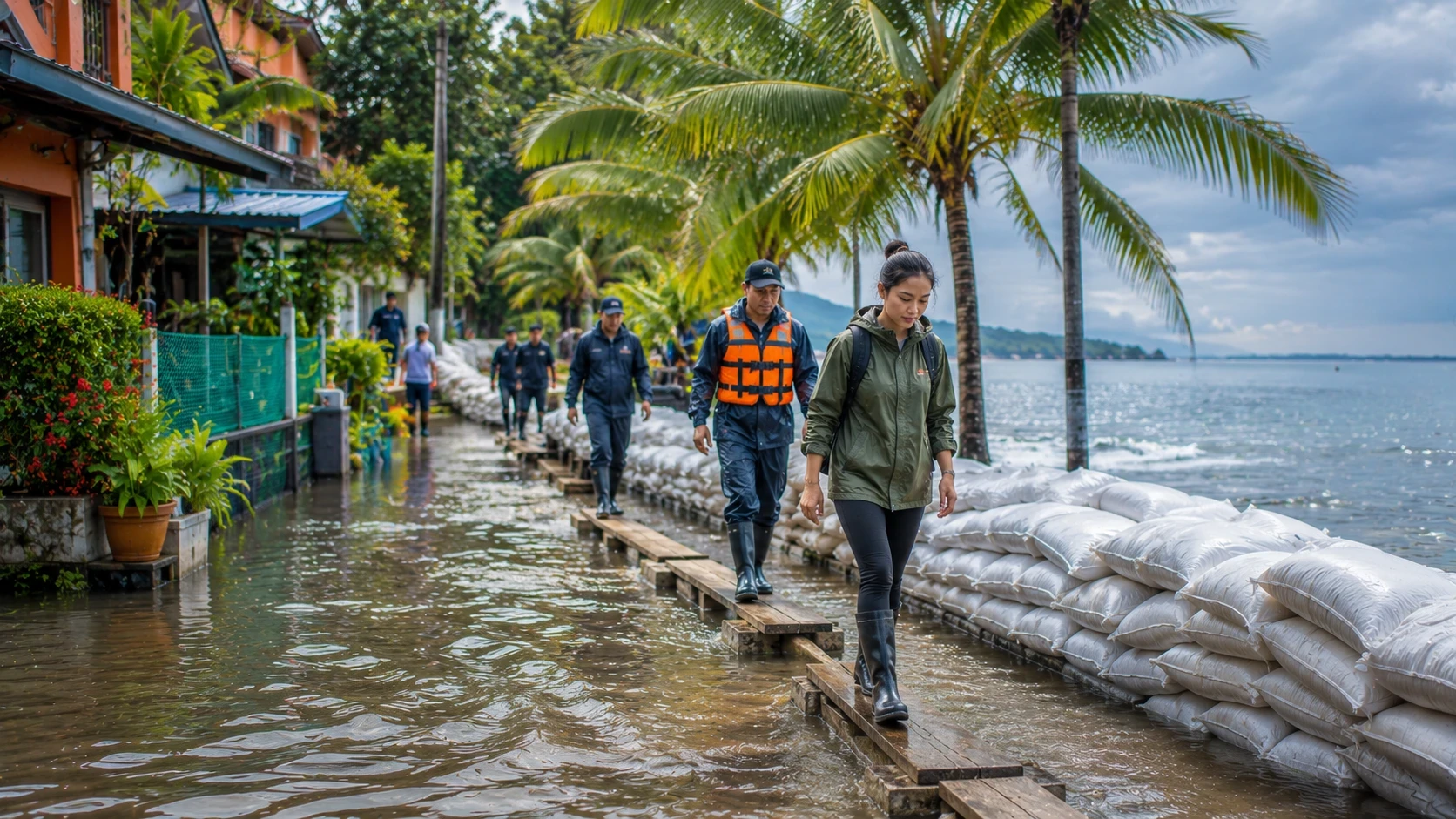
- Sandbags stored beside gates or under stairs
- Permanent barriers or slots for removable ones at entrances
- Drain covers, and whether they look maintained or blocked
- Air conditioning units and meter boxes mounted unusually high
Stored sandbags are the clearest answer you will get. Nobody keeps them for a problem they do not have.
Condominiums flood differently
An apartment on the tenth floor does not flood. The building around it can still stop working, and that is the risk a buyer should actually price.
Underground parking is the vulnerable part, along with generators, pumps and electrical rooms if they sit at or below ground level. Ask where the electrical room and the pumps are, and what happens to the car park in heavy rain. These belong on the same list as the other things worth asking about security and building management in Thai condominiums.
Water and power go together
Flooding rarely arrives alone. Substations are shut down as a precaution, lifts stop, and the pumps that supply water to a building's roof tank stop with them.
So a flooded street can mean a dry tap several floors up. How those interruptions work and what to keep at home is set out in the guide to power cuts and water shortages. Assume any serious flood day is also an outage day and prepare once for both.
The coast is a different problem
Coastal flooding is not heavy rain overwhelming drains. It is the sea arriving where it does not usually reach, driven by storm surge, high tides and long-term erosion.
Parts of the Gulf coast have lost beach over decades, and seawalls mark where the shoreline used to be. Which towns are exposed and which sit behind natural protection is part of the picture of quieter beach towns in Thailand. On the coast, ask what the shoreline looked like twenty years ago, because that trend continues.
Beachfront costs more than the premium
A first-line position carries a price premium and a maintenance burden that buyers underestimate. Salt, wind and spray attack everything metal and everything painted.
Add surge risk and erosion and the annual cost of the same building is higher than one set back a few hundred metres. Price the second row honestly against the first: the view costs money every year, not only at purchase.
What a flooded street actually disrupts
Damage is rare. Disruption is constant, and it is what shapes daily life in the wet months.
Traffic collapses, motorbike taxis stop, deliveries fail, schools sometimes close early, and a twenty-minute journey becomes two hours. Judge a location by how it behaves on a bad afternoon, not by whether water has ever entered the building. The second almost never happens; the first happens often.