
Off-plan properties
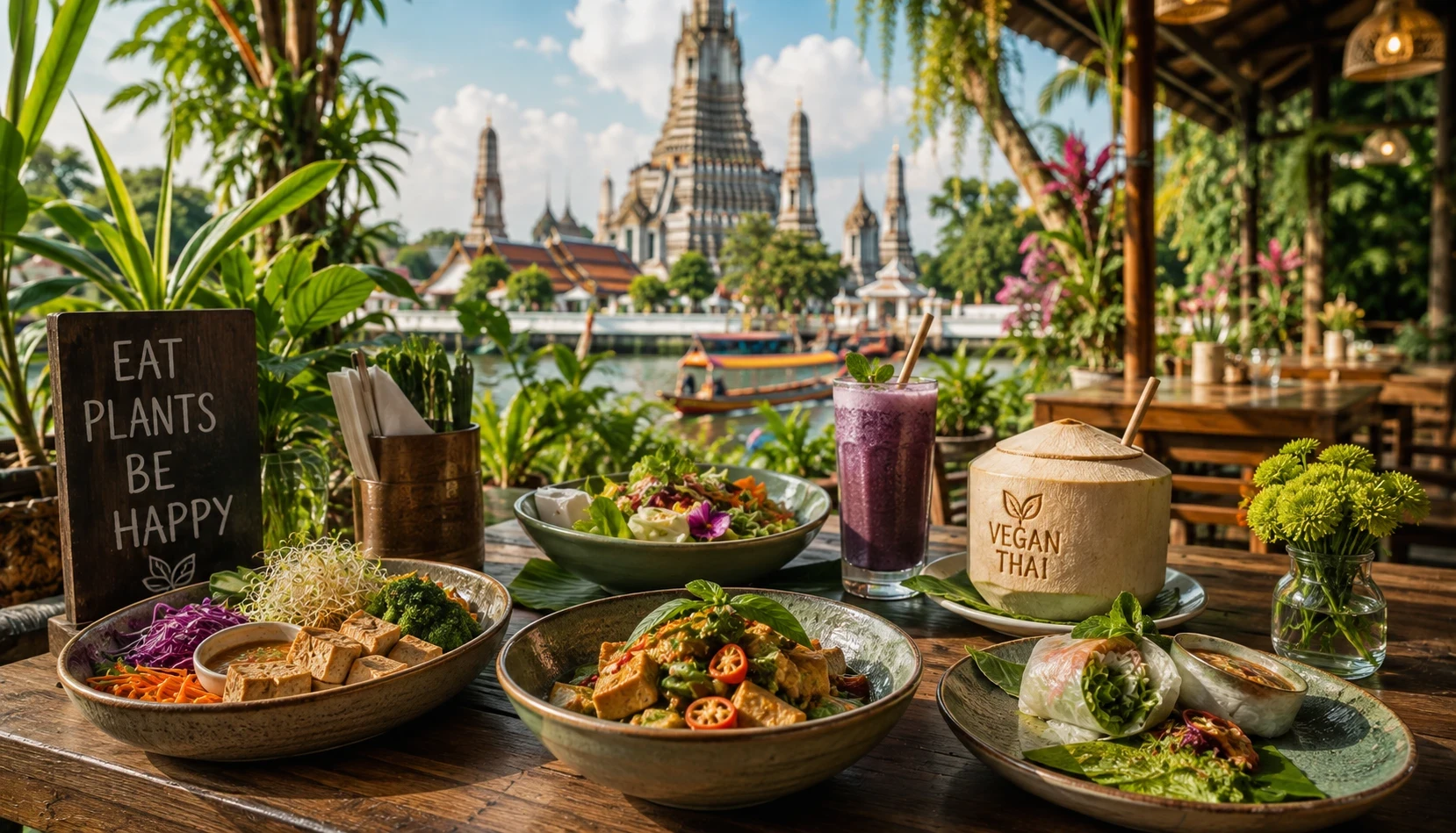
Finding a vegetarian restaurant in Thailand is easy. Eating vegetarian in an ordinary Thai restaurant is the hard part. Most standard dishes contain fish sauce or shrimp paste by default, including the ones that look entirely plant-based.
A vegetable stir-fry, a papaya salad, a curry paste, a bowl of noodle soup — all of them usually start with something from the sea. Nobody hides it. It simply is not thought of as an ingredient that needs mentioning.
So the useful skill here is ordering rather than searching. Below is the one Thai word that solves most of it, how to order in ordinary places, which cities are easiest, and what to do at home. Kitchens vary, so treat this as the pattern rather than a guarantee.
Thailand has its own category of strictly plant-based food, called jay. It excludes meat, fish, eggs, dairy and also strong-smelling vegetables such as garlic and onion. It is stricter than Western veganism in some respects and equally strict in the rest.
Jay food is marked with a distinctive yellow sign with red characters, and once you learn to spot it you will see it everywhere. It is available all year, not only during the autumn festival. The festival makes it briefly ubiquitous, and the festival calendar tells you when that happens, but the everyday network of jay kitchens operates in ordinary neighbourhoods twelve months a year.
Two Thai terms cover this ground and they are not the same. Using the right one avoids most misunderstandings:
| Term | What it excludes | Use it when |
|---|---|---|
| Jay | Meat, fish, eggs, dairy, garlic, onion | You want strict vegan and will accept the milder flavour |
| Mangsawirat | Meat and fish, but eggs and dairy usually allowed | You are vegetarian rather than vegan |
| Neither | Nothing by default | Ordinary restaurants, where you must specify |
Asking for mangsawirat in a normal restaurant often still gets you fish sauce, because the cook hears «no meat» rather than «no animal products». That is why the follow-up phrases below matter.
Most of your meals will happen in places that are not vegetarian at all, which is where the practical work is. Three additions to your order do almost all of it:
A few words of Thai change the outcome here more than fluency would, and the survival phrases worth learning include these. Write the phrases on your phone in Thai script. Showing a screen works when pronunciation does not.
These are the ones you can adapt in almost any kitchen, which makes them a reliable fallback anywhere in the country:
Made-to-order beats pre-cooked every time. A dish already sitting in a tray was seasoned hours ago and cannot be changed. A wok started when you order can be.
Provision is very uneven across the country, and knowing that in advance saves frustration:
For anyone weighing where to be based, this is a genuine factor rather than a detail, and it lines up with the comparison between Phuket, Chiang Mai and Pattaya on other measures too.
Some temples run kitchens serving jay food, and markets often have a dedicated stall marked with the yellow sign. Both are cheap, plain and reliable.
The food is usually served from trays and priced by the number of items. This is the cheapest reliable option in the country, and in smaller towns it is sometimes the only one. Ask at a temple rather than assuming — provision varies and some kitchens serve only on particular days.
Six things account for almost every accidental slip. Learning to ask about them by name is more useful than any restaurant list:
None of this is deception. These are seasonings rather than ingredients in the local view, which is exactly why they do not get mentioned unless you ask.
Thai meals are shared. Dishes arrive in the middle and everyone takes from them, which makes a single dietary requirement awkward in a way it is not at home.
The graceful solution is to order one or two plant-based dishes for the table rather than one for yourself. Everyone eats them, nobody is inconvenienced, and you have something to eat. The wider table customs are covered in the guide to dining etiquette in Thailand. Explaining your diet at length is the part that lands badly, not the diet itself.
For residents this solves the problem entirely, and Thai markets make it cheap. Vegetables, tofu, herbs and coconut milk are everywhere and cost very little.
Two substitutions replace almost everything you would otherwise avoid: light soy sauce or a mushroom-based sauce instead of fish sauce, and a curry paste checked for shrimp or made yourself. Vegan curry pastes are sold in ordinary supermarkets, usually marked with the same yellow jay symbol you see on restaurant signs.
Shopping divides along predictable lines, and knowing them saves a lot of walking:
For nine days each autumn a large part of the country's food economy turns plant-based. Streets fill with yellow flags, ordinary restaurants add jay menus, and supermarkets stock whole aisles of it.
It is a wonderful time to be vegetarian here and a misleading one. People who arrive during it and judge the country by that week are surprised afterwards. The permanent picture is the one described above: a solid year-round network, much thinner outside the cities.
Visitors need a list of restaurants. Residents need something else: a routine. After a few months most people converge on the same pattern.
They find two or three places near home where the cook understands their order, they cook at home more than they expected, and they stop trying to eat plant-based at every social meal. The neighbourhood matters more than the city. Two districts of the same town can be completely different on this, which is worth checking before signing a lease.
Is Thai food naturally vegetarian-friendly?
It looks that way and is not. Vegetables are everywhere, but fish sauce, oyster sauce and shrimp paste are the default seasonings, so most dishes need adapting rather than choosing.
Will saying «no meat» be enough?
Usually not. It is heard as no visible meat, which leaves fish sauce and stock in place. Naming the specific sauces works far better than describing your diet in general terms.
Is jay food available outside the festival?
Yes, all year. The festival makes it briefly visible everywhere, but the year-round network of jay kitchens and market stalls operates in ordinary neighbourhoods regardless of season.
Which city is easiest?
Chiang Mai by a clear margin, with a dense concentration of dedicated kitchens. Bangkok has more choice in absolute terms but it is spread across a very large city, so your district decides your experience.
Is it more expensive?
Not if you eat local. Jay stalls and temple kitchens are among the cheapest food in the country. Imported substitutes and specialist health shops are where the cost appears, and neither is necessary.
It sounds like a small thing and it shapes daily life more than most items on a viewing checklist. DDA Real Estate is a real estate agency working in Thailand, and the ordinary texture of a neighbourhood is part of what we look at with clients: what is within walking distance, what is open in the evenings, what closes out of season and what the area looks like on a wet Tuesday rather than in a photograph.
Look at our offers in Thailand and leave a request: we will shortlist properties in areas that match how you actually live, tell you what is genuinely nearby rather than what a map suggests, and be straightforward about the ones where daily errands would mean driving.