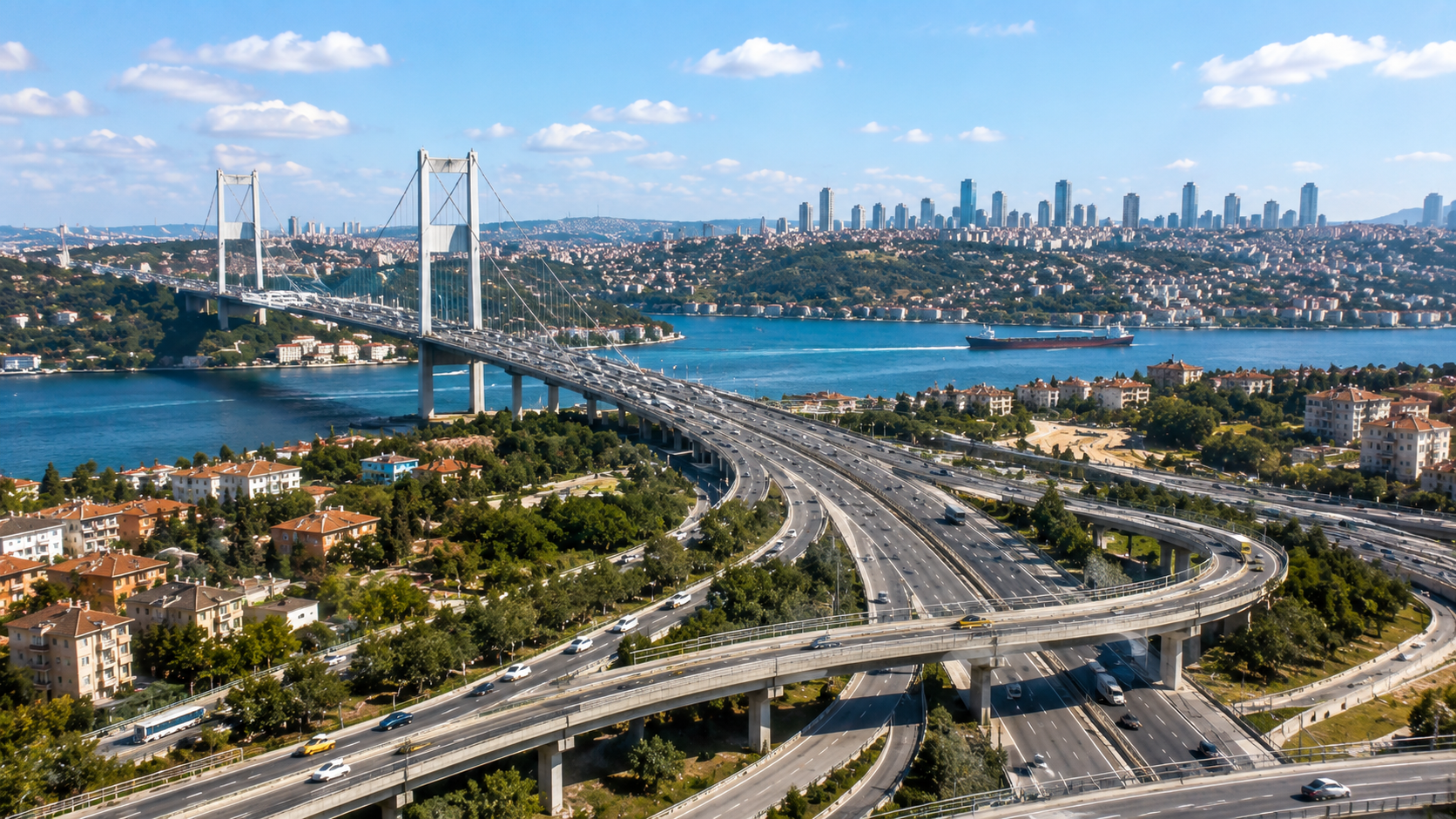
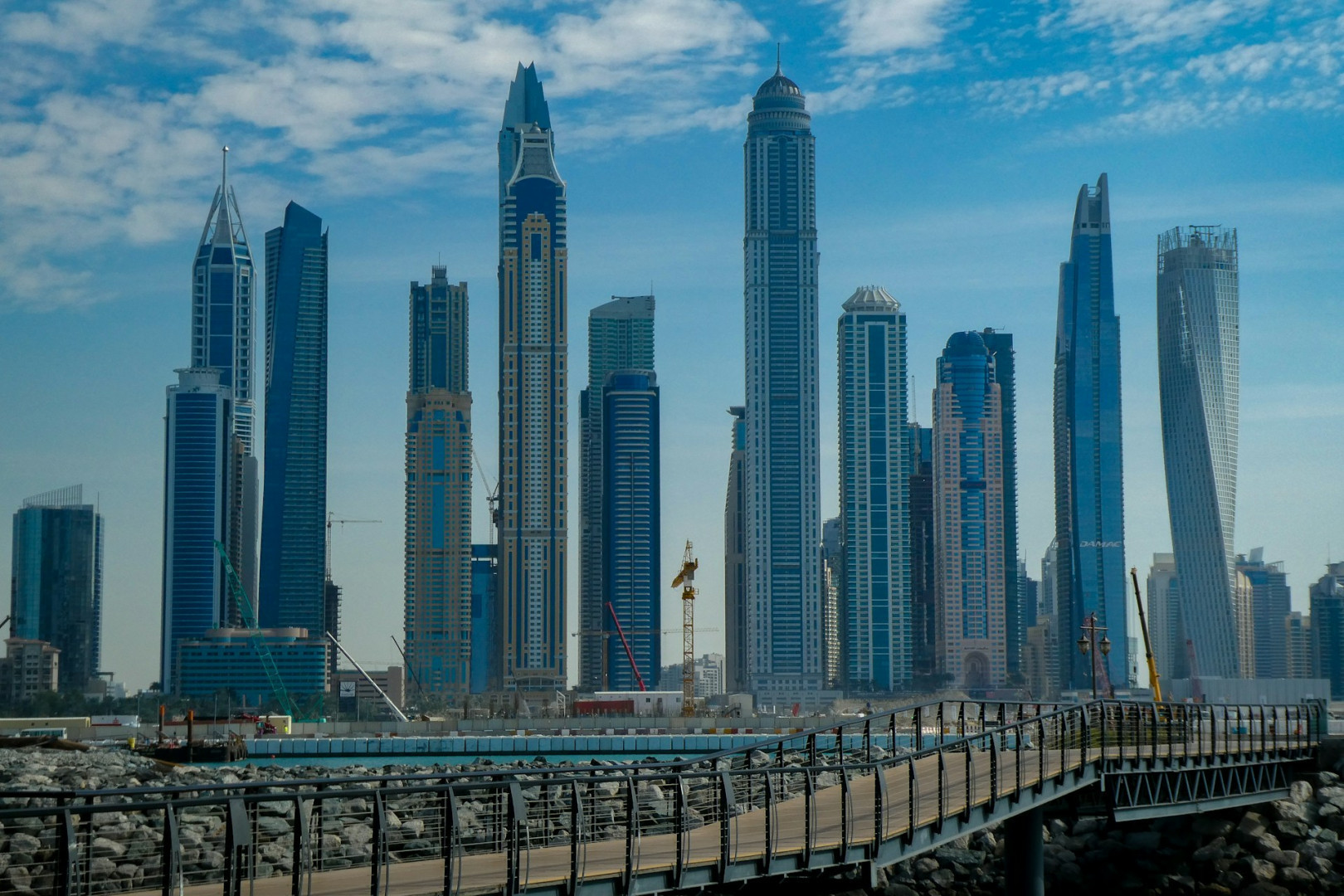
Off-plan properties
| Source | Recent Commitments |
|---|---|
| World Bank | $1.9B for Asia-Europe rail link (April 2026) |
| AIIB + ADB + IsDB + EBRD + OPEC Fund | $6.75B for Northern Peripheral Railway (February 2026) |
| Private BOT Consortia | Istanbul Airport, Yavuz Sultan Selim Bridge, Eurasia Tunnel |
| Turkish Government Budget | Baseline domestic infrastructure investment |
| Sovereign Wealth Funds | Long-term infrastructure equity |
Total Turkish transport infrastructure investment over past 20 years: $355 billion, of which $180 billion in roads and airport expansion. The February 2026 $6.75B package: six international development banks simultaneously committed. Coordinated commitment of this scale does not happen for speculative projects — it signals that multiple sophisticated institutions independently conclude a project is essential, viable, and strategic.
127-kilometer electrified high-capacity rail line under construction, financed by $6.75B (February 2026) + $1.9B (April 2026) = over $8.6 billion in international financing. Impact:
Ankara-Istanbul High-Speed Rail: Already Operating
YHT line operational since 2014, running up to 300 km/h. Travel time between Turkey's two largest cities: approximately 3 hours 15 minutes. Ankara's YHT station opened in 2016 — one of the country's most advanced rail facilities. Additional YHT connections serve Eskişehir, Konya, and other cities. High-speed rail transforms the practical meaning of "living in one, working in the other". Context on the capital's growing appeal: living and learning in Ankara.
Marmaray and Istanbul Metro Expansion
Properties within 10–15 minutes walk of a metro station typically command 10–20% premiums over comparable properties in transit-poor areas — a gap that widens as Istanbul's network expands and central district congestion worsens. See beginner's guide to investing in Istanbul property for metro-linked neighborhoods that have benefited most.
| Specification | Details |
|---|---|
| Total length | 45 km |
| Base width | 275 m minimum |
| Depth | 20.75 m |
| Total project cost | $15B |
| Vessel capacity | Tankers to 275m length, 145,000 tonnes |
| Sazlıdere Bridge span | 1,618 m (piers to 90m; towers to 196m) |
| Total zone area | 453M m² (112,000 acres) |
| Yenişehir new city | Master-planned smart city, TOKI 24,150+ residences tendered |
Documented land price impact: Çamlar village along canal route: $6 → $184/m² (30x). Other locations: $25 → $800/m² (32x). These are recorded transaction data, not projections. Adjacent districts benefiting: Başakşehir, Arnavutköy, Küçükçekmece.
Legal disputes over zoning continue — Istanbul Metropolitan Municipality has filed lawsuits arguing reserve areas include agricultural land, forests, water basins with ecological risk. Construction proceeds despite ongoing legal process. For full property purchase due diligence in this context: property purchase in Turkey 2025.
Istanbul Airport
76.5M m² site; capacity 200M passengers/year; 4 terminals; 6 runways (first global airport with 6 independent parallel operations); 300+ international routes. Aerotropolis-style city development around airport driving property demand in Arnavutköy, Başakşehir.
Sabiha Gökçen International
Asian-side second major airport. First direct rail link to Istanbul Airport via Inrail (under construction).
Ankara Esenboğa
Capital airport, expanded significantly. Combined with 3-hour high-speed rail to Istanbul, positions Ankara as attractive alternative to Istanbul density. Ankara city guide: 7 things to do in Ankara.
Trade route emerged as one of world's most consequential logistics corridors following disruption of northern routes across Russia. Connects:
Current transit: 18 days Beijing to London. Inrail Northern Peripheral Railway designed to reduce further and expand throughput. This is why World Bank, AIIB, and Asian Development Bank all committed capital simultaneously — Turkish infrastructure serves half the global trading system, not just domestic markets.
| Timeline | Milestone |
|---|---|
| 2026 | Inrail construction acceleration |
| 2026–2027 | Canal Istanbul infrastructure phases (Sazlıdere Bridge, Yenişehir housing) |
| March 2027 | First 500,000-unit social housing deliveries |
| 2028 | Northern Peripheral Railway partial completion; airport-to-airport rail |
| 2028–2030 | Yenişehir new city phase completion |
| 2030+ | Middle Corridor 50M tonnes annual rail freight target |
Why is Turkey investing so much in infrastructure?
Five converging drivers: geographical position on Europe-Asia routes; 85+ million population with strong urbanization; Middle Corridor trade route; earthquake resilience mandates; access to global infrastructure capital via PPP models. Structural forces that continue for at least a decade.
Who funds Turkey's mega projects?
Mix: government budget for baseline; international development banks (World Bank, AIIB, ADB, IsDB, EBRD, OPEC Fund) for major projects — including the $6.75B February 2026 package plus $1.9B April 2026 World Bank commitment; Private BOT consortia for airports/bridges/highways; sovereign wealth funds and institutional investors for long-term equity.
How does infrastructure affect Istanbul property prices?
Substantially. Documented: Canal Istanbul land $6→$184/m² (30x); airport-adjacent property in Başakşehir/Arnavutköy appreciating steadily; metro-station properties commanding 10–20% premiums.
What is the Inrail Northern Peripheral Railway?
127-km electrified rail with $8.6B+ in international financing. Bypasses central Istanbul; first direct link between airports; increases Bosphorus rail freight from 3M to 50M tonnes; 400,000+ jobs. Critical Middle Corridor link.
What infrastructure projects are most important for property investors?
Growth: Canal Istanbul adjacent, Istanbul Airport corridor, Inrail zones. Yield: Istanbul metro-adjacent properties. Lifestyle: coastal cities newly accessible via highway improvements (Antalya, Bodrum).
Turkey's infrastructure is not developing rapidly by accident — it is the product of specific structural forces that continue for at least the next decade. The $6.75B committed in February 2026 signals international lenders continue to believe in Turkey's structural case despite macroeconomic volatility. For any 2026 property investor, understanding these forces is not optional. Canal Istanbul zones, airport corridors, metro-adjacent properties, high-speed rail cities, and newly connected coastal areas represent distinct infrastructure-driven investment theses — each with own timeline, risk profile, potential return. Team DDA Real Estate provides infrastructure roadmap analysis alongside property due diligence. Contact us for how these themes apply to your specific strategy.